
Richmond Theatre – Thursday 23rd April 2026
Reviewed by Carly
5*****
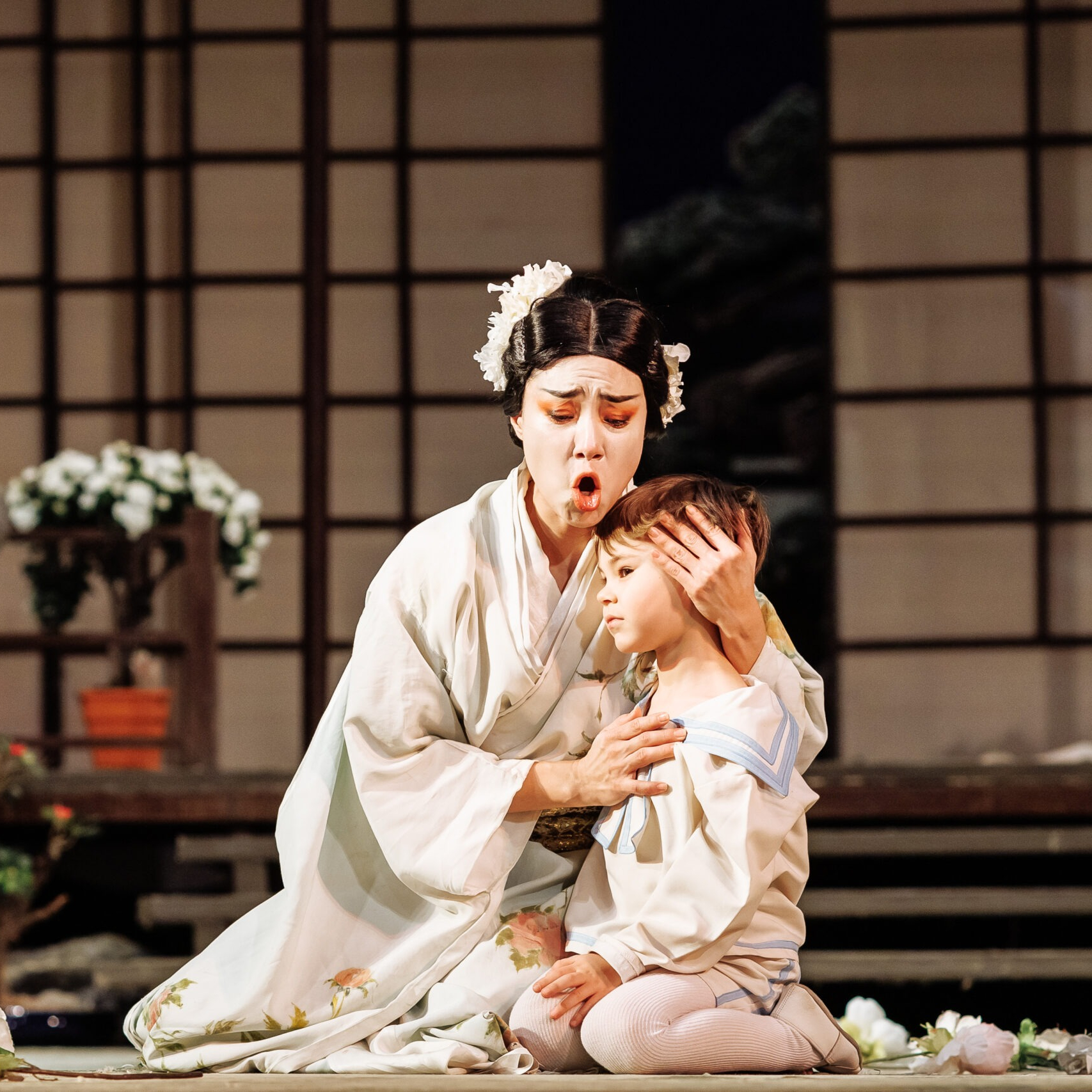
Ellen Kent’s Madama Butterfly is a deeply moving and visually splendid production that captures the enduring emotional power of Puccini’s masterpiece with remarkable clarity and sincerity. From the opening moments, there is a sense of tradition and reverence for the work, combined with a commitment to making it feel immediate and accessible for a contemporary audience. The result is an opera that feels both grand in scale and intimately human in its storytelling.
At the heart of the production is the tragic figure of Cio-Cio-San (Elena Dee), delivering a performance of striking emotional depth. Her portrayal is beautifully judged, capturing Butterfly’s youthful optimism, unwavering devotion, and eventual heartbreak with sensitivity and control. Vocally, the performance is rich and expressive, with a warmth that carries effortlessly through the theatre.
Opposite her, Pinkerton (Oleksii Srebnytskyi) is portrayed with a confident, commanding presence that suits the character’s early arrogance and charm. As the story progresses, there is a noticeable shift in tone, with glimpses of remorse emerging beneath the surface. The tenor’s voice is strong and assured, particularly in the duets, where it blends effectively with Butterfly’s more delicate phrasing. Their relationship is central to the opera’s emotional arc, and the contrast between his casual approach and her deep sincerity is made painfully clear.
Sharpless, the American consul (Iurie Gisca) provides an important moral counterpoint, and his performance is marked by a sense of dignity and compassion. His attempts to mediate and warn are delivered with genuine concern, adding another layer to the unfolding tragedy. Suzuki, too, deserves special mention for her grounded and heartfelt portrayal, offering both emotional support too and a more pragmatic perspective on the situation. The chemistry between these characters helps to create a believable and emotionally engaging world.
Visually, the production is rich and evocative, staying true to a traditional aesthetic that suits the opera beautifully. The set design makes use of detailed backdrops and carefully chosen props to evoke the setting in Nagasaki, creating a strong sense of place without overwhelming the performers. Costumes are particularly striking, with intricate designs and vibrant colours that reflect both the cultural setting and the emotional tone of each scene. The attention to detail is evident throughout, contributing to a cohesive and immersive visual experience.
Lighting is used effectively to enhance the mood, shifting subtly to reflect the passage of time and the changing emotional landscape. Softer, warmer tones dominate the early scenes, underscoring the sense of hope and romance, while later moments are marked by cooler, more subdued lighting that mirrors the growing sense of isolation and despair. These transitions are handled with care, supporting the narrative without drawing attention away from the performances.
Musically, the orchestra delivers a strong and sensitive interpretation of Puccini’s score. The balance between pit and stage is well judged, allowing the singers to shine while still maintaining the richness of the orchestral sound. The conductor ensures that the pacing remains steady and purposeful, giving space for the music to breathe in key moments while keeping the overall momentum intact. Puccini’s sweeping melodies and delicate orchestration are given full expression, enhancing the emotional impact of the story.
What makes this production particularly effective is its commitment to storytelling. There is clarity in the direction that ensures the narrative is easy to follow, even for those who may be new to opera. The emotional beats are well defined, and the relationships between characters are developed in a way that feels natural and engaging. Rather than relying on spectacle alone, the production places its focus firmly on character and emotion, allowing the tragedy to unfold with genuine impact.
The final act is especially powerful, handled with a sense of restraint that makes it all the more devastating. Butterfly’s quiet determination and ultimate sacrifice are portrayed with dignity and poignancy, avoiding melodrama in favour of a more understated, deeply affecting approach. The closing moments linger long after the curtain falls, leaving a lasting impression of both beauty and sorrow.
The production is a fitting tribute to a beloved opera, presented with care, respect, and a clear understanding of what makes the work so enduring. It is a performance that resonates on both an emotional and aesthetic level, offering a compelling and memorable experience for audiences of all backgrounds.