
The Watermill Theatre, Newbury – until 9 May 2026
Reviewed by Marcia Spiers
4****
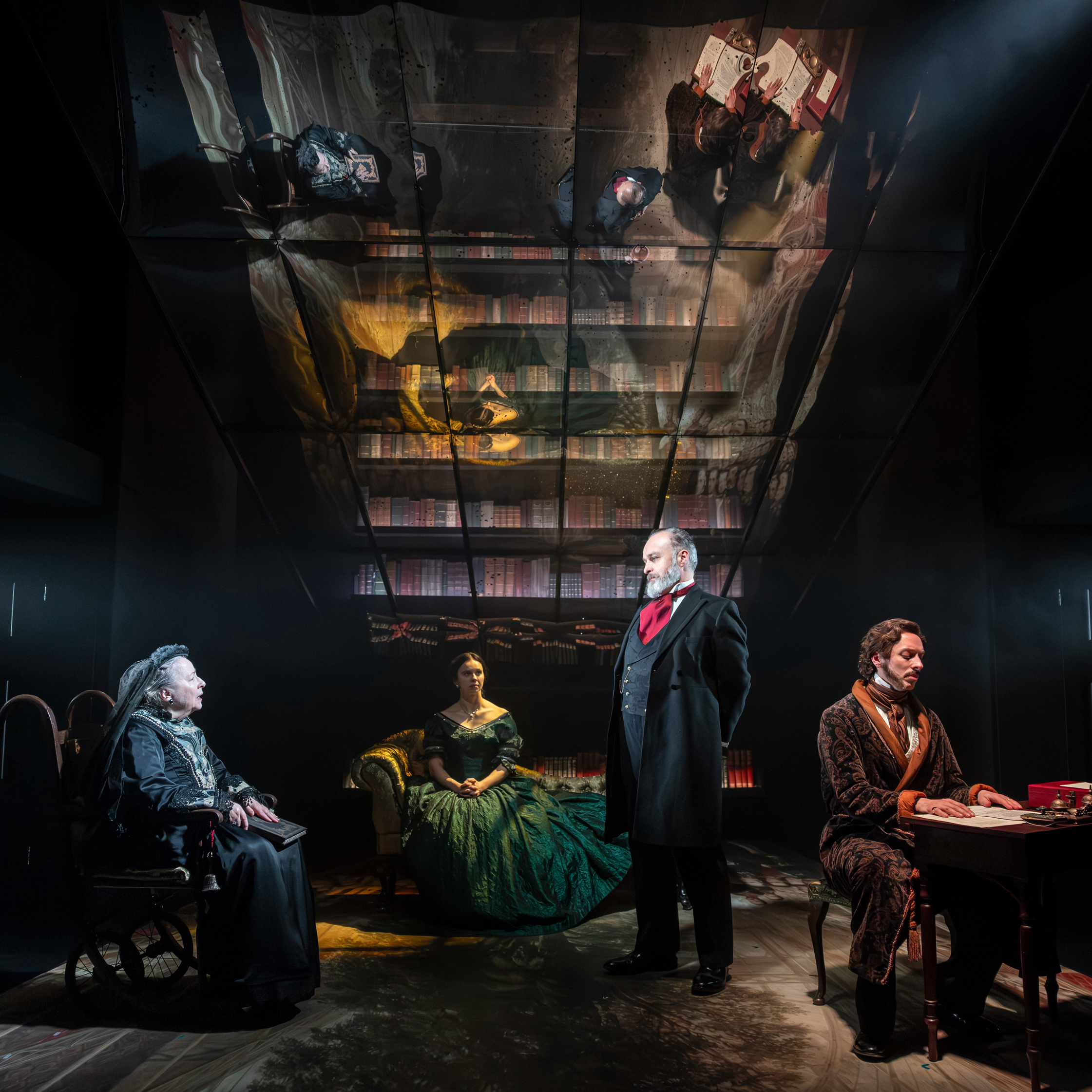
A Fresh Perspective on Queen Victoria and Prince Albert
This remarkable new play, written by Daisy Goodwin and directed by Sophie Drake, casts fresh light on the dynamic between Queen Victoria and her husband, Prince Albert. Historians have often described Victoria as deeply enamored with Albert throughout their marriage and utterly heartbroken by his death at the age of forty-two. Later portraits of her depict a woman bereft of joy, despite being surrounded by her nine children and numerous grandchildren.
The play delves into the contrast between the relationship described in Victoria’s renowned diaries and the true nature of her marriage. Albert is shown exerting significant control over Victoria, from selecting her hats and scrutinizing her papers to dictating what she should sign and taking on many of her responsibilities. He often traveled and made decisions on her behalf, justifying his actions by claiming that Victoria, with nine children to care for and emotional instability, needed someone to take the reins. The narrative suggests that Victoria may have found more happiness after Albert’s passing than she revealed, especially after beginning her relationship with John Brown, which brought her a renewed sense of enjoyment and freedom.
Jessica Rhodes delivers a heartfelt portrayal of the young, spirited Victoria, passionately in love and reveling in her new marriage. As the play progresses, she transforms into a woman given to intense emotional outbursts, gradually realizing the extent of Albert’s control and manipulation.
Amanda Boxer offers an outstanding performance as the widowed Victoria, presenting a stark contrast to her youthful counterpart. She captures the iconic mannerisms and expressions of the older Queen, and the reflective exchanges between her and her younger self are especially poignant.
Rowan Polonski embodies Prince Albert with competence and composure, portraying a caring exterior that masks an underlying need for control. His depiction of the German Prince skillfully balances both understanding and coercion.
Stephen Fewell takes on the role of Victoria’s eldest son, “Bertie,” the future King Edward VII. His performance highlights Bertie’s already controversial reputation for indulgence and high living.
Lydia Bakelmun gives an impressive performance as Beatrice, Victoria’s youngest daughter, who remains by the Queen’s side after becoming a widow herself. The play depicts the relationship between Victoria and Beatrice as one founded on trust and respect, even in the face of their differences, challenging the notion of Victoria’s supposed dislike for her children.
Steve Chusak delivers a polished portrayal of Dr. Reid, the Queen’s physician. As the keeper of secrets and custodian of Victoria’s final wishes, he represents the confidant she relied on when trust was scarce.
The set design makes clever use of the stage space, with the library and the reflective scenes between the younger and older Victoria standing out as highlights. Period-appropriate costumes contribute to the authenticity, and the production maintains its momentum and emotional intensity from beginning to end.
The play captivated me from start to finish, offering a fresh perspective on the world of royalty. Its approach invites audiences to reconsider what lies beneath the surface of the monarchy, a theme relevant to other royal families around the globe. Congratulations to everyone involved in this production. See! A great production in lovely surroundings.