
Jack Studio Theatre – until 16 May 2026
Reviewed by Claire Roderick
3***
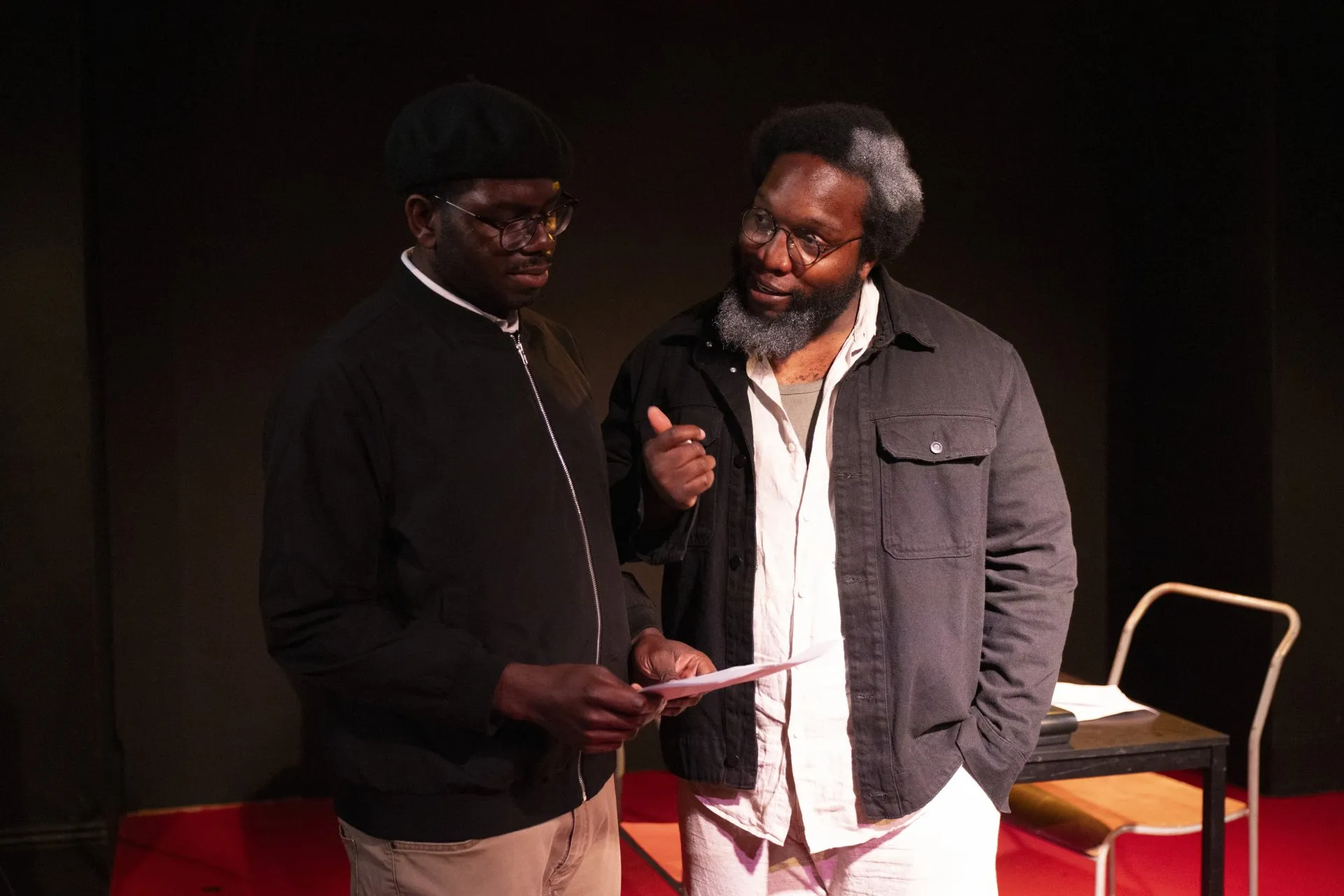
Emeka Agada’s new play has immense potential but in its present form feels slightly overstuffed leading to a less impactful experience than the subject matter deserves.
Set in the 1990s USA, the play opens with a raid and the arrest of Dr Oko (Agada) – something he appears to be prepared for. Whilst on death row awaiting execution for his political crimes, Oko is visited by a former student, Asante (Kenneth Butler). Asante is now a journalist and he says he wants to make a record Oko’s revolutionary life and teachings.
The play is mostly static, taking place in an interview room in the prison with the protagonists sitting opposite each other and leaving their chairs for flashbacks or asides. Director Nathaniel Brimmer-Beller ensures the audience never get comfortable with Rey Wong’s unsettling lighting design.
Oko’s recollection of Asante as a “difficult” student is a hook into the ensuing debate between the characters about systemic racism, capitalism and revolution.
Agada ‘s Oko is charming but razor sharp, with unbending and unrepentant convictions but it is not until you see him in flashbacks giving speeches that you see his true charismatic power outweighing his flaws. Asante’s memories of his student activism have been dulled by his responsibilities to his young family, but Oko sees him as a final chance to carry out his final act of revolution.
A camera records the visuals of the encounters but Oko thinks he can speak freely. The dialogue, although covering so many crucial points, feels like a college tutorial at times and when jeopardy is introduced as the authorities use Asante to try to discover Oko’s plans it is a welcome relief. It also draws a stark contrast between what each man is willing to sacrifice for the cause.
The actors give passionate performances, but there are so many issues thrown about in the dialogue that they are never really given the opportunity to sink their teeth into anything, leaving important scenes – even the climatic drug overdose – underwhelming.
There’s no denying the fervour of Agada’s writing, but The Last Black Messiah needs a more focussed and streamlined approach in order to entertain as well as educate.