
STORYHOUSE, CHESTER UNTIL – SATURDAY 25TH APRIL 2026
REVIEWED BY MIA BOWEN
5****
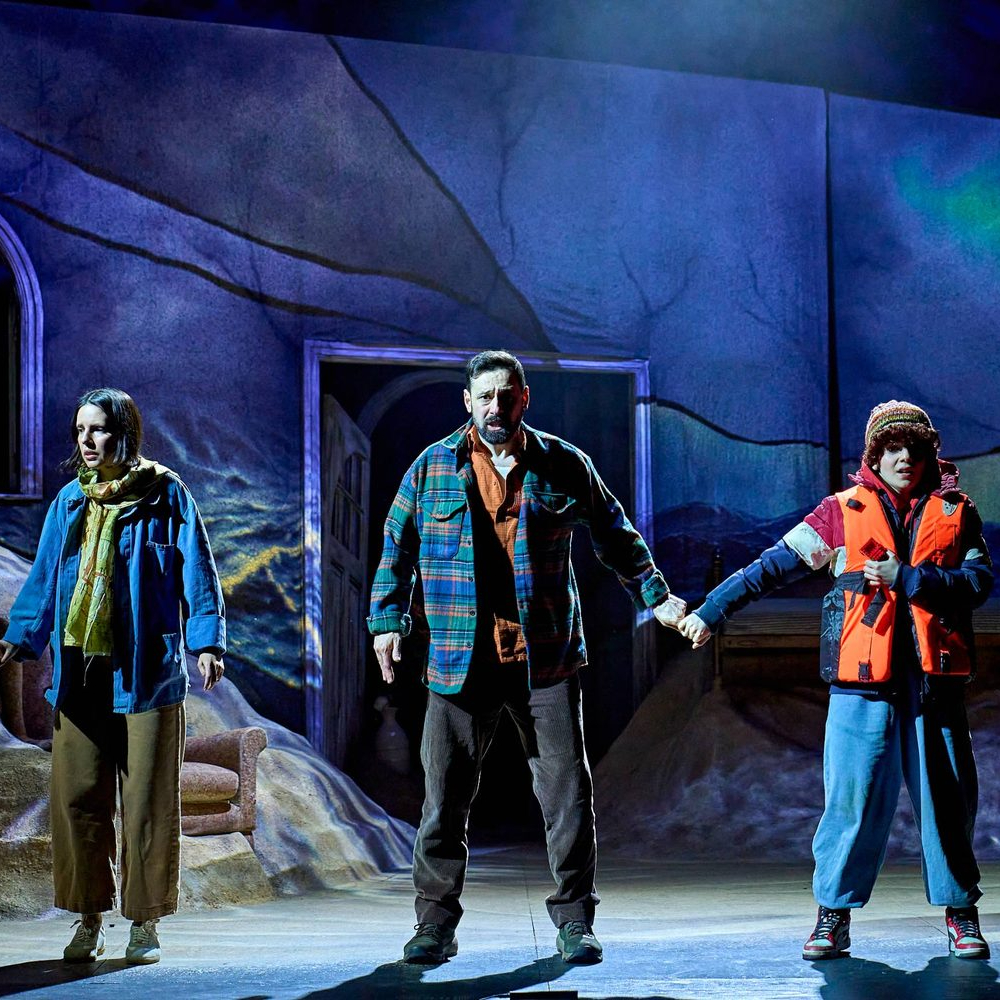
Every so often, one has the privilege of witnessing a theatrical performance that feels truly remarkable. Last night’s rendition of The Beekeeper of Aleppo was one of those extraordinary productions. Its impact lingered long after the final applause, and I found myself needing a moment to wipe away my tears and gather my composure before leaving my seat. Having heard such glowing reviews of the novel by Christy Lefteri, I had been eagerly looking forward to seeing it adapted for the stage, and it certainly did not disappoint.
As I took my seat, I was immediately struck by the simplicity of the stage, beautifully designed by Ruby Pugh. At first glance, it seemed minimalist, featuring two gentle sand dunes and furniture that appeared almost sculpted from the sand itself. Behind them stood a structure reminiscent of an old building, quietly grounding the scene. However, this simplicity contributed to its beauty. Throughout the performance, the structure came alive through projected images, lighting and subtle details that guided the audience through various locations and moments in time. As the story unfolded across vastly different countries, the staging adapted seamlessly, making each new setting feel vivid and authentic while maintaining its understated elegance.
In the stage adaptation brought to life by Nesrin Alrefaai and Matthew Spangler, the story gains immediate emotional resonance. It follows Nuri, a beekeeper, and his wife Afra, who are compelled to flee their home in Aleppo after experiencing devastating loss.
Their journey is portrayed with intimacy and rawness, immersing the audience in their experiences of fear, love, and survival. From the outset, it is clear that they reach the United Kingdom, yet this does not provide comfort. It is their treatment and the events they, along with countless other refugees and displaced persons, encounter along the way that truly shape the narrative. The play refrains from offering easy solace, instead gently yet powerfully reminding us that safety does not merely hinge on arrival. What makes this adaptation particularly poignant is its ability to convey the emotional weight of trauma. Nuri’s fragmented memories and Afra’s quiet suffering are expressed with a tenderness that resonates in both silence and dialogue. Through minimalist staging and profoundly human performances, the audience is encouraged not just to observe, but to experience—sharing in moments of hope, despair, and resilience.
I was utterly entranced by Adam Sina’s portrayal of Nuri—his performance was profoundly moving and imbued with quiet emotional depth. From the outset, one can sense the pain he bears from the loss of his son, and every word he utters feels authentic and lived-in. Similarly, Farah Saffari’s performance as Afra is equally compelling; she conveys immense loss and resilience with striking honesty. Together, they craft a truly unforgettable experience—an emotional journey that resonates long after it concludes.
Ultimately, this stage version is not simply a retelling, but an intensely moving experience that underscores the humanity behind the headlines, leaving a lasting impression of empathy, loss, and the enduring strength of love.