
York Opera House – until Saturday 21st February 2026
5*****
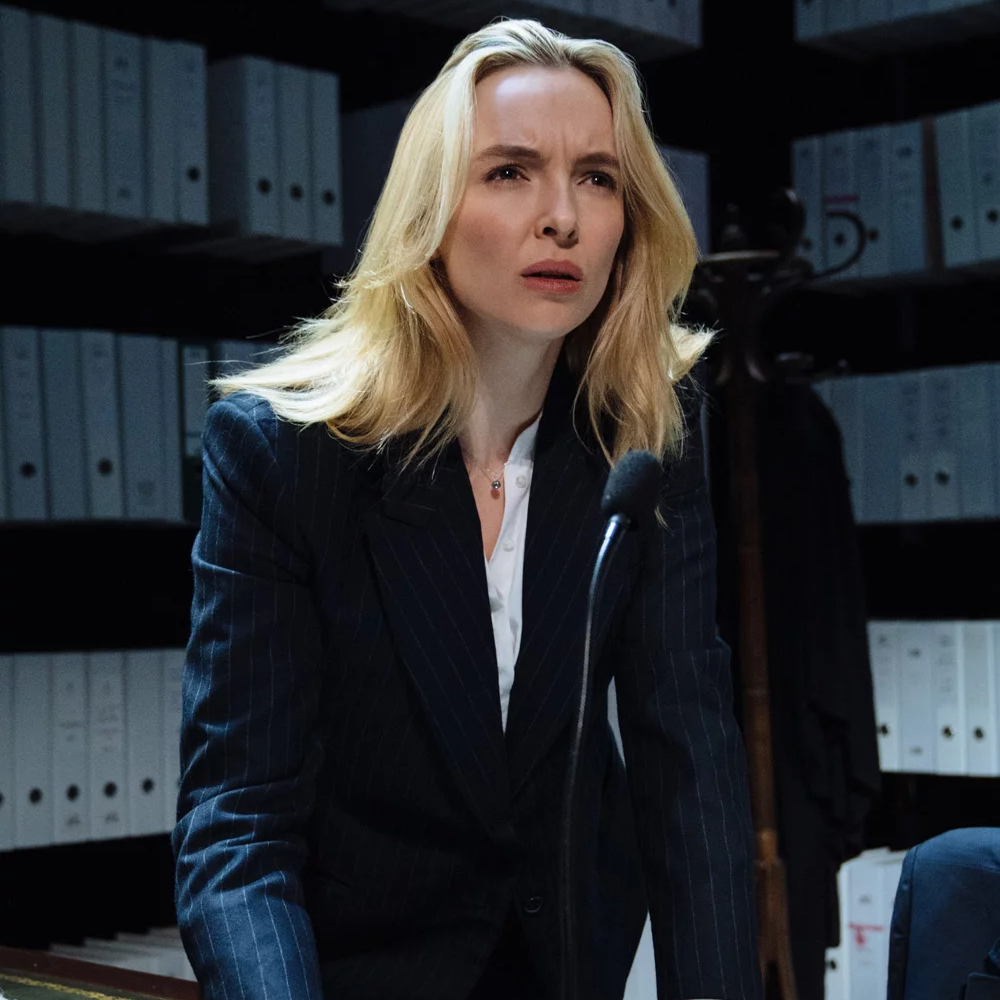
Last night in York, Prima Facie proved itself to be exactly what its reputation promises: urgent, devastating, and impossible to shake. Performed at the York Grand Opera House, this one-woman play landed with the force of a verdict read aloud in a silent courtroom.
At the centre of it all was Jodie Comer, delivering a performance that can only be described as blistering. This was a tour de force in the truest sense, controlled, ferocious, and heartbreakingly precise. To borrow the play’s own language, Comer’s work here is the crème de la crème: the very best of what contemporary theatre can offer.
Written by Suzie Miller, Prima Facie charts the transformation of Tessa, a brilliant criminal defence barrister who believes fervently in the law, until the law turns its cold, procedural gaze on her. Miller’s writing is razor-sharp, balancing legal argument with deeply personal testimony, and Comer navigates these shifts with astonishing clarity. She moves seamlessly from swaggering courtroom confidence to vulnerability and rage, never losing the audience for a second.
The staging is deceptively spare. The set, designed by Miriam Buether, places Tessa in a flexible, abstract legal landscape: part courtroom, part memory, part psychological battleground. It’s a space that Comer actively works, rearranging furniture, shifting objects, and physically reshaping the stage to mirror Tessa’s changing inner world. Watching her do this while remaining fully inside the character is a quiet marvel of theatrical discipline.
Equally striking is the lighting design by Natasha Chivers, which sculpts the performance with forensic precision. Stark whites interrogate, deep shadows accuse, and sudden shifts in tone land like legal objections. The lighting doesn’t decorate the action; it argues with it, underscoring the play’s themes of exposure, power, and scrutiny.
What makes Comer’s achievement all the more extraordinary is the sheer endurance required. For 100 uninterrupted minutes, she is alone on stage — no breaks, no scene changes to hide behind — delivering a torrent of complex dialogue entirely from memory. The mental and physical effort involved is immense, and yet it never shows. Every line feels freshly discovered, every pause deliberate.
One of the most indelible images of the evening comes when rain begins to fall on Tessa. It is a simple theatrical device, yet utterly devastating in effect. Comer sits just off-centre stage as the water pours down on her, her exterior stripped away with everything else, until she is just a woman in a summer dress, soaked, shaking, and broken. Her composure dissolved into raw, unguarded grief; tears mixed with rain as she stared into the void, overwhelmed by what had been taken from her and by the system she once trusted. In that moment, there is no rhetoric, no advocacy, only heartbreak. The audience watches, transfixed, as Comer allows the silence and the rain to do their work, creating a tableau of vulnerability that feels almost too intimate to witness. It is a scene that lodges in the chest and refuses to leave.
By the final moments, the audience in York was utterly still, held in a collective breath. Prima Facie is not an easy night at the theatre, but it is an essential one — and Comer’s performance ensures it will linger long after the lights go down.
*I would like to make it clear that I paid for my ticket for Prima Facie but was so inspired by this outstanding piece of female empowerment