
The Hope Theatre, Islington – until 3rd October 2026
Reviewed by Bobbi Fenton
5*****
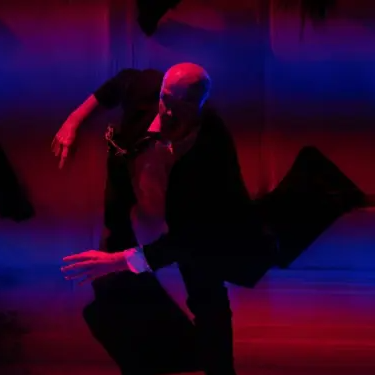
GRIEFCASE explores the complicated and often unpredictable nature of grief through the story of G (Ru Lawrence), who returns to his late mother’s flat after her death. What follows is an emotional journey through memories, guilt, anger, love and the difficulty of letting go.
From the very beginning, the production establishes the complicated relationship between G and his mother. We see moments of happiness and affection alongside arguments, frustration and guilt, creating a character who is forced to confront not only the loss of his mother, but also the things left unsaid between them.
One of the most striking aspects of GRIEFCASE is its use of physical theatre. The production’s use of sound and movement is incredibly effective during its more emotional moments. These moments never feel like grief is being reduced to a single emotion. Instead, the audience is shown how messy, contradictory and deeply personal it can be. Rather than relying solely on dialogue to communicate G’s emotions, movement becomes a language of its own. Non-naturalistic movement sequences, exaggerated physicality and moments where G appears controlled by his grief, represented by Jack St Leger with marionette-like movements, effectively demonstrate the ways grief can take control of a person. The physicality of the production gives the audience an insight into emotions that G himself often struggles to express.
The show also refuses to portray grief as a straightforward process. Instead, elements of the five stages of grief appear throughout the story: denial as G attempts to convince those around him that he is coping, anger emerging through reliving conflicts with his mum (Collete Hodson) or his friend Lucy (Poppy Janisch), bargaining appearing through his attempts to relive good memories he had with his mum, depression from feeling guilt and during his eventual breakdown, and finally acceptance during the final scene, his mum’s funeral, which follows a deeply moving conversation between himself and his mum.
There are moments of genuine humour amongst the sadness, which feels particularly important. As G puts it, after well-intentioned but awkward friend Garry (Jack St Leger) makes an inappropriate joke, “If you don’t laugh, you’ll cry,”. A night out with friends, an increasingly chaotic karaoke session and moments of silliness provide some much-needed lightness, while also showing the different ways people attempt to cope with loss.
The relationships surrounding G are equally important. G struggles with the feeling that the people around him are simultaneously holding him together and holding him back. His guilt over not calling or visiting his mother more often becomes another layer of his grief, particularly as he reflects on both the good and difficult aspects of their relationship.
Perhaps what makes GRIEFCASE so effective is that it doesn’t suggest there is a correct way to grieve. G laughs, becomes angry, tries to distract himself, remembers the good times, dwells on the bad ones and eventually begins to accept that his mother is gone. The result is an honest and deeply affecting portrayal of loss.
On a more personal note, I lost my own mum two and a half years ago, and this play is by far the most accurate representation of grief that I have ever had the privilege of seeing. Although my relationship with my mum was somewhat different from G’s relationship with his own mother, the way the play portrayed grief felt incredibly familiar to me. It captured so many of the emotions, thoughts and experiences that I have encountered in my own grief, making it an extraordinarily realistic and powerful depiction.
GRIEFCASE is a thoughtful exploration of what happens when someone loses a person who was simultaneously a source of love, frustration, comfort and pain. Through physical theatre, humour and moments of raw vulnerability, it creates a powerful reminder that grief is rarely as simple as saying goodbye.