A STATEMENT FROM SHARON D CLARKE & THE ROYAL SHAKESPEARE COMPANY
The RSC today announce the postponement of Othello starring Sharon D Clarke in the title role, as she takes time to undergo treatment for cancer. The production, directed by Monique Touko, was scheduled to run from 13 February – 3 April 2027 in the Swan Theatre, Stratford-upon-Avon.
Director Monique Touko said: “On behalf of the entire creative team, we send Sharon all the love for her ongoing treatment and recovery. As a Director, I have been incredibly blessed to collaborate with Sharon on this major reframing of Shakespeare’s tragedy, which reimagines Shakespeare’s ‘Othello’ through the lens of misogynoir. Sharon is the ultimate collaborator. Her generosity and passion for this project continues to astound me and I look forward to us coming back together when the time is right to share this production with the world.”
RSC Co-Artistic Directors Daniel Evans and Tamara Harvey added: “The casting of Sharon as Othello is integral to Monique Touko’s adaptation, which is why we have taken the difficult decision to postpone, to give Sharon the time and space she needs to undertake treatment. Sharon is, in every sense of the word, a warrior and, we know she will meet this challenge with the unwavering strength and indomitable spirit that she brings to so many aspects of her life and work. We look forward to revisiting this thrilling collaboration in the future and, on behalf of everyone at the RSC, we send Sharon our love and strength for a full recovery.”
Sharon D Clarke says “I would like to thank all the beautiful people at the RSC for their understanding, love, support and healing energy. Othello will be my north star as I undergo treatment. Susie, my family and I are overwhelmed, humbled and buoyed by the tidal wave of love that we have received and are so blessed to have an army of strength and support to hold us up. Love and thanks to my beautiful people.”
All audience members affected by the cancellation will be provided with an automatic refund. Replacement programming will be announced in due course.
Singer and actor Sam Ebenzer sat down with fairypowered to answer 20 questions. Sam is currently in The Choir of Man. Currently on tour around the UK – get tickets here
Let’s start with a few favourites
Favourite show (whether you have been in it or not)?
One of my favourite shows is ‘Oliver!’, purely for nostalgic reasons. This was the show that got me into Musical Theatre after playing the role of Oliver when I was 10 years old in my local theatre in Aberystwyth.
Favourite theatre?
I have been very fortunate to perform in a few different theatres, especially this year whilst on tour. My favourite has been the Welsh Millennium Centre, but I am biased as a Welshman.
Favourite song?
My favourite song will totally depend on my mood. But at the moment I am loving ‘Some Things I’ll Never Know’ by Teddy Swims.
Favourite music?
I honestly enjoy listening to many styles of music but you can guarantee that when I jump on a piano, I will start singing some Elton John, or blasting a bit of Sam Fender or Scary Pockets through my headphones.
Favourite food?
Anything Italian. A pasta dish with some seafood and I am happy.
Favourite drink?
Easy – cup of tea! Multiple times throughout the day.
What is your favourite role to play in TheChoir of Man?
The thing I enjoy the most about being a swing in TheChoir of Man is how I get the opportunity to perform as different characters all the time. It keeps the show fresh and exciting for me. The Poet will always have a place in my heart as I played the role for 6 months in London, but I do enjoy the chaos of Joker every now and again.
What was your first role?
As previously mentioned, Oliver was the first role I ever played at The Aberystwyth Arts Centre.
And what role would you really like to play?
I have never been one to get my heart set on a role or show too much. It’s a difficult industry with lots of auditions and rejections, so I have always tried to be more laid back and open to whichever opportunities arise. I started to have this approach with the industry when I was performing in The Mousetrap. I never wanted to perform in a play, but I was glad that I took the job as it was one of the most rewarding contracts I have done.
If you weren’t a performer, what would you be?
I always had my heart set on performing, but if I had to do something else, I think I would have become a teacher.
What made you decide to be a performer?
I always enjoyed singing as a kid, and growing up in Wales, I would always compete in the Eisteddfod, which is the largest youth festival in Europe, where kids can compete in various singing, dancing and recital competitions. After winning the musical theatre competition when I was 15, I knew that this was the route I wanted to take, and decided to audition for drama schools in London.
Do you enjoy touring?
This is the first time I have ever been on a UK tour and it’s been great. It’s so easy to forget how many beautiful places there are in the UK, and when the company is great around you, it makes exploring even more enjoyable.
What advice would you give the 16-year-old you?
Work hard, play harder! It’s important to knuckle down and get the work done, but equally if you are not enjoying yourself along the way, then what’s the point? There is often a lot of pressure in this industry, especially through drama school and when you first graduate, so just know it will all work out ok.
Do you fancy branching out in Producing or Directing?
It is something I would love to do in the future and something I have already started making small steps towards. If I decide I don’t want to perform anymore, I believe this may be the route I go down.
What was the last stage show you saw and really enjoyed?
Unfortunately, it’s been difficult to watch any theatre whilst on tour, but at the start of the year I was visiting my girlfriend on Norwegian Cruise Line and watched her perform in Beetlejuice, which was the first time I’d ever seen the show and absolutely loved it.
If you could be anyone else for the day, who would it be?
I wish I could give you a more profound answer to this question, like being the prime minister for the day so I could make some positive change to the world. But I don’t think I’d want to be another human. I think it would be more fun being an animal for the day. I’d choose a dog, living its best life, running around the park with nothing to worry about all day.
What are the nicest/weirdest things you have ever received from fans?
I have received some incredible paintings and photos over the years, but nothing too weird thankfully.
Sam Ebenzer stars in The Choir of Man on tour until December 2026 – more details here
Everyman Theatre, Cheltenham – until 15th August 2026
Reviewed by Jacqui Radford
5*****
If you’re after a night out that lifts the spirit from the very first note, The Choir of Man absolutely delivers. Set in ‘The Jungle’, the friendliest of pubs, the show offers a fantastic mix of storytelling, banter and song. It genuinely feels less like a theatre trip and more like a great night out at your local with new-found friends.
The production centres around nine men who come together in their local and winds its way through the stories and experiences of each of them through the medium of song. The cast introduce themselves as themselves, adding a touch of authenticity and making the whole experience feel even more genuine.
The title sets the expectation that singing is front and centre, and the show more than delivers. Familiar songs are transformed into emotionally sensitive renditions, while folk-style songs bring group together and draw the audience into the mood of the pub. The music doesn’t just accompany the storytelling it enhances it.
The pub set creates an instant sense of familiarity for anyone who’s ever stepped into a true local. Its doors are thrown open to the audience, inviting everyone to join the fun. You’re not just watching the show; you’re part of the night out. Whether you’re joining in from your seat, hopping up on stage, or being welcomed as a punter during the interval, it feels as though you’ve become part of the pub community for an evening.
Born at the Edinburgh Fringe, the show has added a special touch for its UK tour. Local choirs are joining the cast for cameo performances, reinforcing the power of finding community in song.
The Choir of Man is the tonic everyone needs. From start to finish, it celebrates friendship, music and the magic of shared moments. It’s not just a night out. It’s a reminder of why we get together, why we sing, and why a good pub (real or imagined) can feel like home.
The producers of the multi award-winning, critically acclaimed West End production of CABARET at the KIT KAT CLUB are delighted to announce new casting.
From 21 September 2026, stage and screen stars Skylar Astin (So Help Me Todd; Pitch Perfect) and Sarah Hyland (Modern Family; The Great Gatsby on Broadway) will play Emcee and Sally Bowles respectively, both making their West End debut.
Also joining the company will be Ronan Burns as Ernst Ludwig, Lindsay Atherton as Fraulein Kost/Fritzie, Lily Frances, Peter Houston, Samuel How, Bailey Johnson, Ellie Mitchell, Kirsty Anne Shaw, Natasha Wilde and Nicky Wong Rush.
Continuing in the show will be Baker Mukasa as Clifford Bradshaw, Ruthie Henshall as Fraulein Schneider, Robert Hands as Herr Schultz, Joe Atkinson, Xavion Campbell-Brown, Olivia-Rose Deer, Anya Ferdinand, Danny Fogarty, Adrian Grove and Eva-Rose Tanaka.
The Prologue Company are Isobel Bates, Rachel Benson, Ami Benton, Jonathan Charles, Shanelle Clemenson, Andrew Linnie, Zara Liu, Dak Mashava, Brian James O’Sullivan, Jack William Parry and Shiho Yokoyama.
Skylar Astin final performance will be Saturday 12 December 2026. Sarah Hyland’s final performance will be Saturday 23 January 2027.
CABARET is currently booking until Saturday 18 September 2027. The production has surpassed its 1,900th performance, making it the longest running production of Cabaret in West End history. This year will mark both the 60th anniversary of the show, which originally opened on Broadway on 20 November 1966, and the 5th anniversary of this award-winning production, which opened in the West End on 15 November 2021. A celebration will be held at the Kit Kat Club on Friday 20 November to mark the occasion, with a limited allocation of special priced tickets at £19.66, £60 and £196.60. Tickets on sale now at kitkat.club
Skylar Astin is best known for his role as Jesse Swanson in the hit films Pitch Perfect and Pitch Perfect 2. His theatre credits include originating the role of Georg Zirschnitz in Spring Awakening on Broadway, Mark Cohen in RENT and The Baker in Into The Woods both at the Hollywood Bowl, Tony in West Side Story at Carnegie Hall, and Seymour Krelborn in the off-Broadway revival of Little Shop of Horrors. Further screen credits include 21 And Over, Disney’s Wreck It Ralph, Greg Serrano in Crazy Ex-Girlfriend, Max Richman in Zoey’s Extraordinary Playlist, and Todd Wright in So Help Me Todd playing opposite Marcia Gay Harden. He will next be seen in the horror comedy Nice People, as well as a recurring arc in the hit series Grey’s Anatomy.
Sarah Hyland is best known for her Screen Actors Guild award-winning role as Haley Dunphy in Modern Family. Her Broadway credits include Connie Francis in Just in Time, Daisy Buchanan in The Great Gatsby, Jacqueline Bouvier in Grey Gardens and Audrey in the off-Broadway revival of Little Shop of Horrors. She also starred in Hair at The Hollywood Bowl as Chrissy. Her further screen credits include the role of Heidi Miller in Pitch Perfect: Bumper in Berlin as well as hosting Love Island USA. Hyland’s advocacy for living a healthy lifestyle, combined with her entrepreneurial savvy has led her to sign on as co-founder for the functional candy brand Sourse.
Ronan Burns most recently appeared in Matilda The Musical at the Cambridge Theatre. His other theatre credits include Johnny Casino in Grease at the Dominion Theatre, 42nd Street at the Théatre du Châteletin, Frank/Ensemble in the UK tour of Priscilla Queen of the Desert, Riff in West Side Story at Curve, Leicester and Bugsy Malone at the Lyric Hammersmith.
Lindsay Atherton’s theatre credits include Top Hat at the Chichester Festival Theatre and UK tour, Hello, Dolly! at the London Palladium, Sinatra at the Birmingham Rep Theatre, Newsies at the Troubadour Wembley Park Theatre and South Pacific at the Chichester Festival Theatre. Her credits as an Associate Choreographer include the world premiere production of A Knight’s Tale at the Manchester Opera House, the UK tour of Fisherman’s Friends The Musical and the European tour of Berlin Berlin. As a Co-Choreographer she did the European tour of The Rocky Horror Picture Show.
This unique production of CABARET opened in December 2021 to critical and audience acclaim, widely praised as the ultimate theatrical experience. In April 2022 it won a record-breaking seven Olivier Awards. The production has also won three prestigious Critics Circle Awards as well as the Evening Standard Theatre Award for Best Design for designer Tom Scutt.
Transforming one of London’s most famous theatres with an in-the-round auditorium and reimagined spaces, before the show guests are invited to enjoy and explore the Kit Kat Club with pre-show entertainment, drinks and dining all on offer. When booking, guests receive a ‘club entry time’ to allow enough time to take in the world of the Kit Kat Club before the show starts. But of course, the show really starts when you first join us in the club…
One of the most successful musicals of all time CABARET features the songs Wilkommen, Don’t Tell Mama, Mein Herr, Maybe This Time, Money and the title number. It has music by John Kander, lyrics by Fred Ebb, book by Joe Masteroff. Based on the play by John Van Druten and stories by Christopher Isherwood.
CABARET is directed by Rebecca Frecknall, set and costume design is by Tom Scutt with choreography by Julia Cheng. Musical supervision is by Jennifer Whyte and musical direction is by Ben van Tienen with lighting design by Isabella Byrd, sound design by Nick Lidster, Wigs and Hair design by Sam Cox and Make-Up design by Guy Common. The casting director is Stuart Burt and the original associate director and prologue director is Jordan Fein. The prologue composer is Angus MacRae and the musical director is Ben Van Tienen.
CABARET at the KIT KAT CLUB is produced by ATG Productions and Underbelly.
Presented by Artistic Directors – Sally Hughes & Adam Rolston
The Mill at Sonning, written by Marcia Spiers
The Mill at Sonning launched its new season to a packed audience, marking an exciting new chapter for the much-loved riverside theatre and dining venue. After a challenging year for many arts organisations, The Mill — converted from a watermill into a theatre 44 years ago — is looking firmly ahead, supported by a new consortium committed to steering it into the future.
Set on the banks of the Thames, The Mill remains one of the area’s most distinctive cultural venues. The historic building demands constant care and presents accessibility challenges, but its charm, community value and role in supporting young people into work make it a vital part of local life across Sonning, Reading and South Oxfordshire.
The venue is also broadening its offer beyond theatre, with live music, magic, comedy, afternoon teas and children’s entertainment all part of the programme. Plans are also in place to widen its appeal further and improve accessibility and restroom facilities.
Among the key announcements was the introduction of show-only tickets, which will sit alongside The Mill’s traditional dining and theatre packages. The move should open the venue up to a wider audience and offer greater flexibility for theatre workers. The Mill has also appointed Elegant Cuisine as its new catering and hospitality partner. With more than 50 years’ experience in dining, hospitality and events, the company brings a fresh opportunity to connect food and performance more closely. The new chef, who comes with excellent credentials, is keen to take the existing team forward on this next stage of the journey.
The newly announced season offers a strong and varied line-up:
Agatha Christie’s The Mirror Crack’d, adapted for the stage by Rachel Wagstaff and directed by Jonathan O’Boyle, runs from 4 September to 31 October 2026.
Cole Porter’s Anything Goes, based on the original book by P. G. Wodehouse, Guy Bolton, Howard Lindsay and Russell Crouse, runs from 19 November 2026 to 17 January 2027.
Jeeves and Wooster in Perfect Nonsense, a fast-paced physical comedy adapted from P. G. Wodehouse by the Goodale Brothers and directed by Sally Hughes, runs from 4 February to 21 March 2027.
I Ought to Be in Pictures by Neil Simon is a revival of an uplifting comedy about second chances, forgiveness and the people who matter most, with a wonderful father-and-daughter cast. It runs from 8 April to 23 May 2027.
The Island, a brand-new musical based on Victoria Hislop’s bestselling novel, will have its world premiere at The Mill. It runs from 10 June to 15 August 2027. I am not missing this one — it is one of my favorite novels!
I’ll Be Back Before Midnight by Peter Colley is a stage thriller running from 9 September to 31 October 2027.
And finally…
Kiss Me, Kate, Cole Porter’s musical comedy, runs from 19 November 2027 to 19 January 2028.
With an ambitious programme, new ticketing options and refreshed hospitality plans, The Mill is clearly entering its next chapter with energy and purpose. This is a theatre full of character, producing work of a high standard, and it deserves every support as it continues to thrive on the banks of the Thames.
Clive Francis has made a valiant attempt to adapt this classic Graham Greene novel for the stage. Greene drew on much of his own life experience and the ineptitude of cold war intelligence agencies, during the 50’s and 60’s. Francis captures Greene’s humour, which runs through the piece like Brighton through a stick of rock!
The versatility of the four actors is remarkable and seriously funny all at once. With many quick changes, you can be forgiven for getting slightly confused at times. The first half is stuffed full of dialogue with not enough action to counterbalance.
Jack Ashton plays a simple vacuum cleaner salesman finding himself in Havana, making extra money as a secret service spy. He sends intelligence reports home full of fictional characters and made-up stories. It provides a good living for him and his daughter, who is becoming a young adult. Ashton plays well perturbed disbelief, when the characters begin to come to life! He has accidentally given the names of real people, who are now on the hit list and looking for him. Leon Ockenden, Jodie Steele and Bob Barrett present the caricatures, slipping in out of costume as quickly as they do accents!
Bob Barrett brought the second half alight with his depiction of Teresa, a woman of the night, fully sequined with well placed sparkly stars! Jodie Steele slipped between the upright secretary, the teenage daughter and exotic dancer sometimes on the flip of a coin, with hilarious results! Leon Ockenden fills in the narrative when the pace is in full swing, switching between policeman, cleaner, pimp, plus many others with impressive agility.
The sliding stage sets give you the grounding needed to know where you are and what characters will be in play. It is like watching a paper diorama, in full size! In the same way, the costume gives you a fix on what character is being played. From the first line to the last, you need to pay attention to get the storyline and spot the funnies!
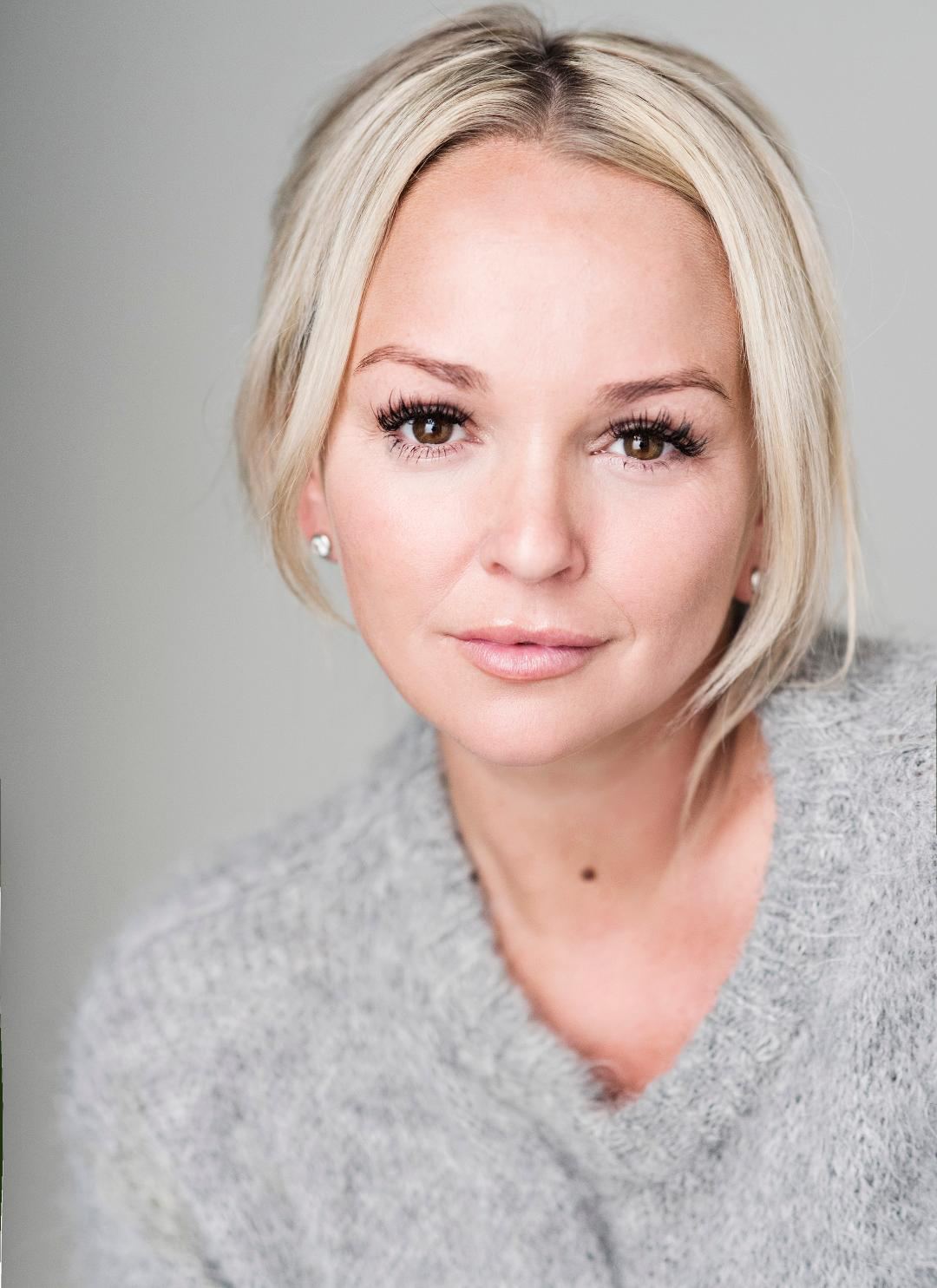
Lorne Michaels, Crossroads Live and Sonia Friedman Productions are delighted to announce that Jennifer Ellison will play Ms Heron/Ms Norbury/Mrs George in selected cities in the 2026/2027 UK and Ireland tour of the award-winning MEAN GIRLS THE MUSICAL.
Jennier Ellison will perform in Bristol, Liverpool, Edinburgh, Wimbledon, Birmingham, Southampton and Newcastle.
As previously announced, Faye Tozer will play Ms Heron/Ms Norbury/Mrs George in Canterbury, Blackpool, Dublin, Crawley, Bradford, Norwich, Nottingham and Sheffield.
Jennifer joins Emily Lane as Cady Heron, Vivian Panka as Regina George, Kiara Dario as Gretchen Wieners, Sophie Pourret as Karen Smith, Georgie Buckland as Janis Sarkisian, Max Gill as Damian Hubbard, Ben Oatley as Aaron Samuels, Karim Zeroual as Kevin Ganatra and Joshua Elmore as Mr Duvall.
Charlie Barnard, Rebekah Bryant, Michael Dean-Wilson, Savannah Ffrench, Fergie Fraser, Thomas Gotobed, Jenny Huxley-Golden, Trisha Kumar, Sadie Levett, Arjun Mudahar, Jessie Odeleye, Stefanos Petri, Charlotte Pourret, Jack Rose, Tori Louise Ryan, Lillia Squires, Jayd’n Tyrone and Chay Wills complete the company.
Jennifer Ellison’s West End credits include Singin’ In The Rain at the Palace Theatre, Boeing Boeing at The Comedy Theatre, and Roxie Hart in Chicago at the Adelphi Theatre, Cambridge Theatre, as well as on a UK Tour and for the 10th Anniversary Gala. Her other theatre credits include UK Tours of Greatest Days, Legally Blonde, Calendar Girls, and a UK Arena Tour of The War Of The Worlds. Jennier’s television credits include Brookside for Channel 4, G’Wed, The Commander: Abduction, The Brief, and The Bill, all for ITV, and Hotel Babylon, The Nativity, and New Street Law, all for the BBC. Her other television credits include SAS Who Dares Wins for Channel 4, Dancing On Ice for ITV, for which she was a semi-finalist and performed on the National Tour, Hell’s Kitchen, which she won, With a Little Help From My Friends for ITV, and appearing as a judge on Dirty Dancing – Time of your Life and as a frequent guest on the ITV daytime show Loose Women. Jennifer also fronted the UK version of the hit US series Dance Moms for the Lifetime channel which followed Jennifer at her very own dance school and college Jelli Studios. Jennier’s film include playing Meg Giry in Phantom of the Opera for Warner Bros, and Tracey in The Cottage.
Meet The Plastics – Regina, Gretchen and Karen. They rule North Shore High and will burn anyone who gets in their way. Home-schooled Cady Heron may think she knows a thing or two about survival of the fittest thanks to her zoologist parents, but high school is a whole new level of savage. When Cady devises a plan to end Regina’s reign, she learns the hard way that you can’t cross a queen bee without getting stung. Expect iconic characters, razor-sharp wit, and killer songs.
MEAN GIRLS, the smash-hit musical comedy based on the iconic Paramount Pictures film of the same name, had its first West End performance at the Savoy Theatre on 5 June 2024, where it was seen by over 330,000 people and played until 8 June 2025. MEAN GIRLS recently took home the coveted ‘Best New Musical’ award at the 2025 WhatsOnStage Awards.
MEAN GIRLS had its world premiere in 2017 at the National Theatre in Washington, D.C and opened on Broadway in April 2018 at the August Wilson Theatre to ecstatic responses, where it played to packed houses. The show then went on a hugely successful US tour in 2019 and recently completed a second US tour. In addition, in 2024, Paramount Pictures released a new twist on the fan-favourite film from the comedic mind of Tina Fey with a fresh and fun re-telling of the story featuring sensational musical performances.
The musical MEAN GIRLS has a book by Tina Fey, music and vocal arrangements by Jeff Richmond, lyrics by Nell Benjamin, direction and choreography by Casey Nicholaw, scenic design by Scott Pask, costume design by Katrina Lindsay, lighting design by Kenneth Posner, sound design by Brian Ronan, hair design by Josh Marquette, musical supervision/vocal, dance, incidental and additional music arrangements by Mary-Mitchell Campbell, orchestrations by John Clancy, dance and incidental music arrangements by Glen Kelly and casting by Natalie Gallacher CDG for Pippa Ailion and Natalie Gallacher Casting.
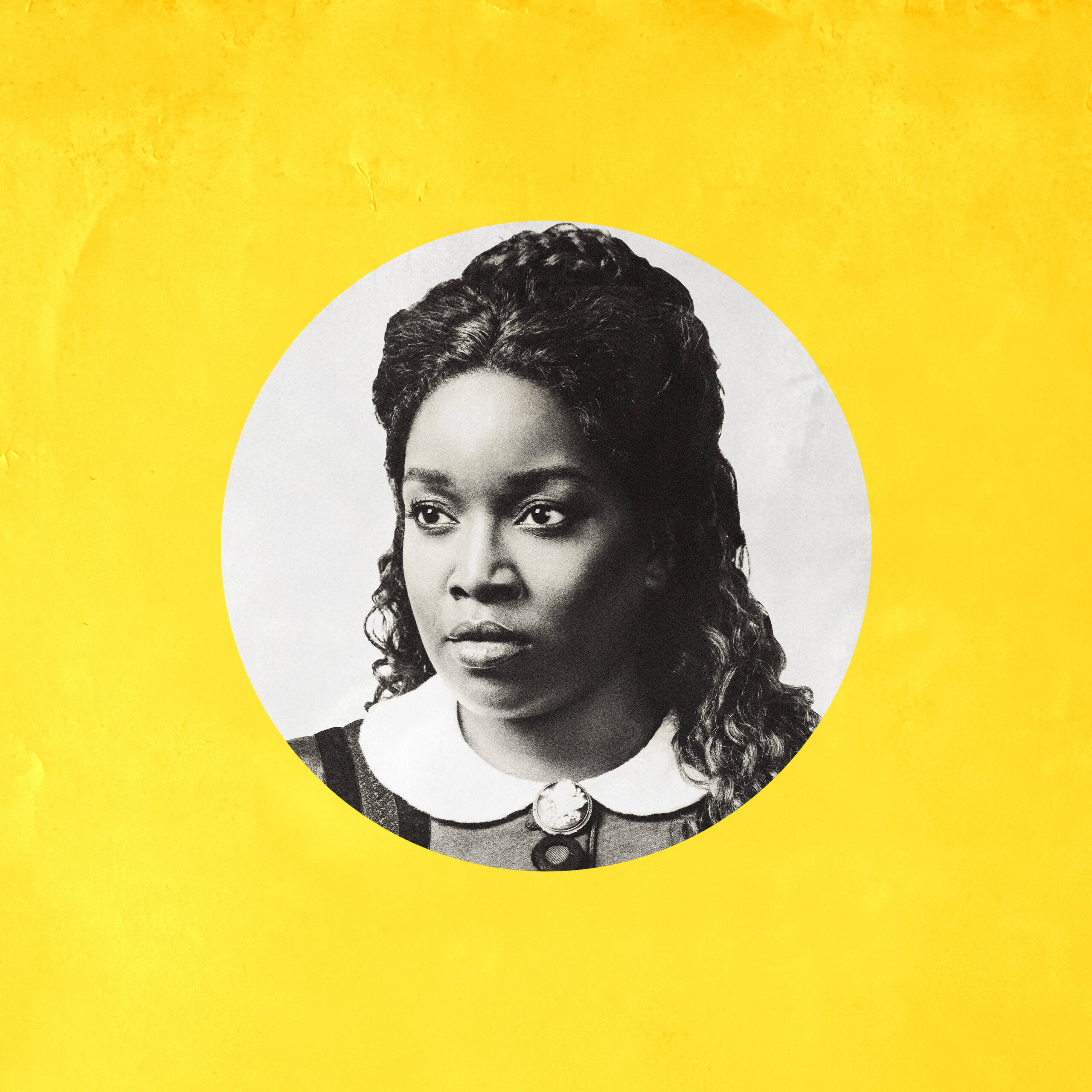
Producers Kevin McCollum & Lucas McMahon and Mike Lavoie & Carlee Briglia are delighted to announce that Lolly Adefope will make her West End debut as Mary Todd Lincoln in OH, MARY! atthe Trafalgar Theatre. Lolly will play a 10-week season from 28 September until 5 December 2026.
The Olivier and Tony Award-winning smash hit comedy OH, MARY! is now booking until 2 January 2027.
BAFTA-nominee Lolly Adefope is a British actress, best known for her role in hit British sitcom Ghosts, created by the team behind Horrible Histories. The critically acclaimed sitcom ran for 5 seasons, has been nominated for 2 BAFTAs and picked up the Broadcast Press Guild Award for Best Comedy in 2024. Ghosts will return for a final outing as a feature film, Ghosts: The Possession of Button House, releasing in October. Most recently, Lolly starred opposite Himesh Patel and Richard E. Grant in HBO superhero satire The Franchise, a role for which she earned a BAFTA nomination for Female Performance in a Comedy. She will also soon be seen in Apple TV’s Prodigies, opposite Will Sharpe and Ayo Edebiri. Lolly was named as one of Vanity Fair’s Rising Stars of 2025. Previous to this, Lolly has had a variety of roles in notable television series, such as Hulu’s hit feminist comedy Shrill alongside Aidy Bryant, as well as This Time With Alan Partridge, Netflix’s Black Mirror, and TBS’s Miracle Workers. Lolly has also appeared in iconic British comedies such as Motherland, Lovesick, and Stath Lets Flats. Lolly has also appeared on the big screen in blockbusters such as Thea Sharrock’s Wicked Little Letters and Emerald Fennell’s Saltburn. Having also had a successful comedy career, Lolly performed her first solo show at Edinburgh Fringe in 2015, and was named one of The Guardian’s Rising Stars of 2017. She has appeared on Taskmaster, and has had guest appearances on The Last Leg, 8 Out Of 10 Cats Does Countdown and QI.
OH, MARY! currently stars Cole Escola as Mary Todd Lincoln, Giles Terera as Mary’s Husband, Dino Fetscher as Mary’s Teacher, Kate O’Donnell as Mary’s Chaperone and Oliver Stockley as Mary’s Husband’s Assistant.
From 17 August until 26 September, Jinkx Monsoon will play Mary Todd Lincoln, alongside Scott Karim as Mary’s Husband, Dino Fetscher as Mary’s Teacher, Kate O’Donnell as Mary’s Chaperone and Oliver Stockley as Mary’s Husband’s Assistant.
Full casting for 28 September onwards is to be announced.
OH, MARY! is a dark comedy about a miserable, suffocated Mary Todd Lincoln in the weeks leading up to Abraham Lincoln’s assassination. Unrequited yearning, alcoholism, and suppressed desires abound in this 80-minute one-act play that finally examines the forgotten life and dreams of Mrs. Lincoln, through the lens of an idiot (playwright Cole Escola).
Declared “one of the best comedies in years” by The New York Times, OH, MARY! received Tony® Awards for Best Leading Actor in a Play (Cole Escola) and Best Direction of a Play (Sam Pinkleton), Drama League Awards for Outstanding Play and Outstanding Direction of a Play, as well as a special citation from the New York Drama Critics’ Circle. It was named a finalist for the Pulitzer Prize for Drama.
OH, MARY! premiered off-Broadway at the Lucille Lortel Theatre in January 2024, before a Broadway transfer to the Lyceum Theatre in July 2024, where it broke box office records and continues to play to sold out audiences. It had its West End premiere at Trafalgar Theatre on 3 December 2025, where it has also broken Box Office records, and won Best Entertainment or Comedy Play at this year’s Olivier Awards. This Autumn, OH, MARY! will also launch a US National Tour.
In addition to ColeEscola (Writer) and SamPinkleton (Director), the full creative team includes dots (Scenic Designer), Holly Pierson (Costume Designer), Cha See (Lighting Designer), Daniel Kluger (Sound Design and Music), Drew Levy (Sound Designer), Leah J. Loukas (Wig Designer), David Dabbon (Arrangements) with Casting by Stuart Burt CDG. Associate creatives include Georgie Rankcom (Associate Director), Zoë Hurwitz (Scenic), Debo Andrews (Costume), Tom Turner (Lighting), Chris Reid (Sound), Kim Kasim (Wigs), Caitlin Morgan (Music Direction), Eleanor Dolan (Costume Supervisor), and Marcus Hall (Props Supervisor).
OH, MARY! is produced in the West End by Kevin McCollum & Lucas McMahon and Mike Lavoie & Carlee Briglia with Bob Boyett, The Council, Jean Doumanian Productions, Nicole Eisenberg, Jay Marcus & George Strus, Irony Point, Richard Batchelder/Bradley Reynolds, Tyler Mount/Tommy Doyle, Nelson & Tao, Palomares & Rosenberg, ShowTown Productions, Jamie Wilson Productions and Wessex Grove.
The Executive producers of OH, MARY! at Trafalgar Theatre are Wessex Grove
Nottingham Royal Concert Hall – until Saturday 15 August 2026
Reviewed by Louise Ford
3***
It’s all about the pies
When I was asked to review Waitress I was pleased as I do love a musical but I was also puzzled as I hadn’t heard of this particular one. This is a bit surprising as Waitress is celebrating its 10th anniversary this year and has received a whole host of nominations both in the America and in the UK. It was the first Broadway musical created by an all female team. It was originally a book written by Jesse Nelson, which was turned into a film, with the script written by Adrienne Shelly. The rights were snapped up and the story was turned into a musical. The songs were written by singer-songwriter Sara Bareilles and the script by playwright Paula Vogel. So quite a gap in my musicals’ knowledge.
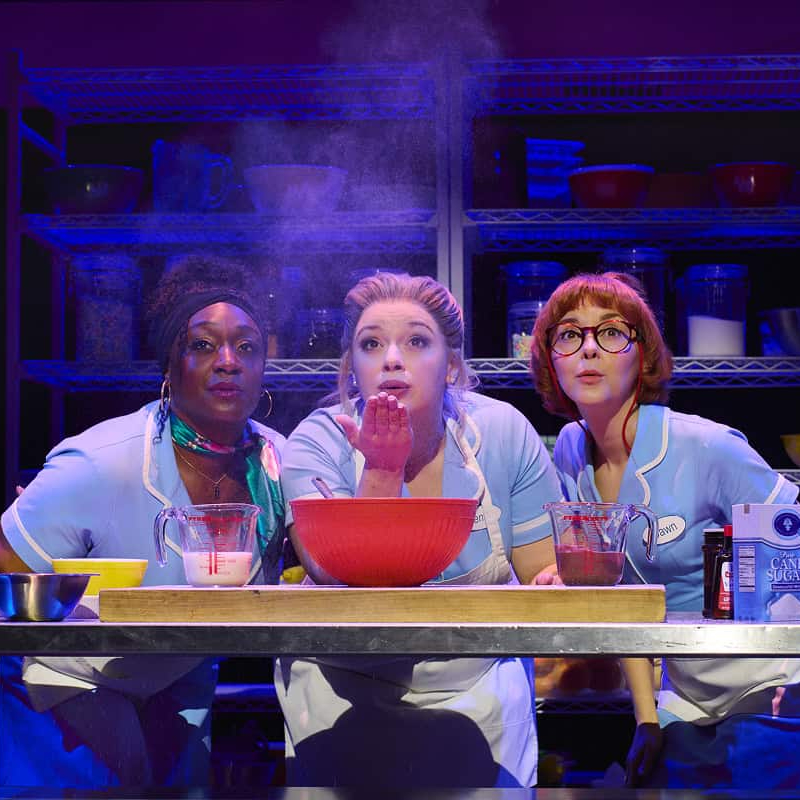
So onto the show. The story centres around three waitresses and a busy diner. There’s Jenna (Carrie Hope Fletcher), Becky (Sandra Marvin) and Dawn (Evelyn Hoskins), three waitresses who all have man trouble of one sort or another. They are an all female team of solidarity who support each other whilst delivering pies and coffee to the diners. The diner set is amazing (Scott Pask) it effortlessly moves from the kitchen, where Jenna is creating her magical pies to the front of house where most of the action takes place. In the background there’s a backdrop of a road leading out of town towards a vast horizon.
The diner is owned by the cranky Joe (Les Dennis), with his specific meal order (cream on a separate plate), who turns out to be a fairy godfather at the end. The diner is managed by the short tempered Cal (Dan O’Brien), the waitresses, not surprisingly, run rings round him.
Whilst I loved the setting and the live band, on stage, I struggled a bit to understand the lyrics. The balance between the singers and the lyrics did not seem quite right. This improved in the second half, maybe my hearing had adjusted accordingly. The first half seemed confusing, busy, lively and a bit improbable. I couldn’t quite believe in the romance between Jenna and Dr Pomatter (Dan Partridge). The plot isn’t difficult to follow it just seemed a bit unlikely. The mix of kitchen sink drama and magical baking (sugar), didn’t always gel, for me. Also there are a lot of songs but none of them are particularly memorable.
Having said all of the above the acting and the singing is first class. The last two songs delivered by Jenna (She Used to be Me and Everything Changes) really captured the audience and had them on their feet.
So take a slice of marshmallow mermaid pie and a cup of thick black coffee, down to the Royal Concert Hall and see what you think for yourselves.
MOONLIGHT FLICKS OPEN AIR CINEMA, STORYHOUSE IN THE PARK, CHESTER – UNTIL 31ST AUGUST 2026
REVIEWED BY MIA BOWEN
5*****
I went to Moonlight Flicks Open Air Cinema to watch Mamma Mia! —the first of six films this season—and honestly, I wasn’t quite prepared for how much I was going to love it. Picture this: a huge inflatable screen, a very British blanket of cloud overhead (but thankfully not a single drop of rain!), and that unmistakable buzz of people settling in for a night that already feels a bit special before the film even starts.
It was my first time, so I went in curious… and came out wondering why I haven’t been doing this every summer of my life.
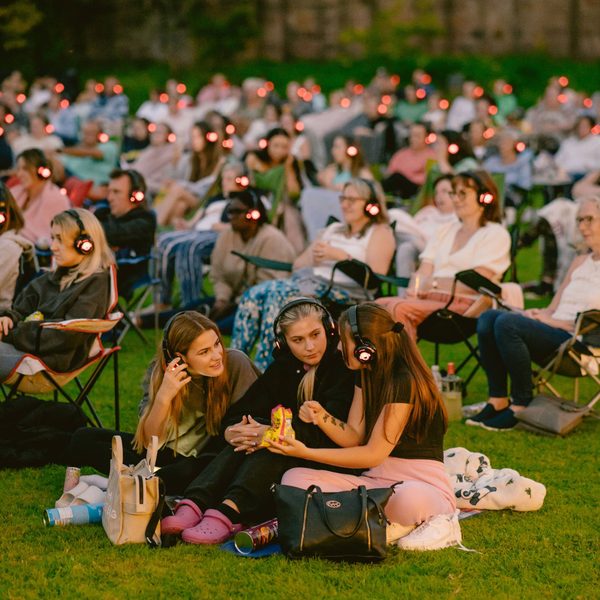
Like Grosvenor Park Open Air Theatre, it’s not just about the show —it’s about the whole experience. There’s something so lovely about watching everyone arrive, juggling blankets, snacks, and chairs like it’s a competitive sport. Some people had hired chairs, others came fully prepared with their own, and a few (clearly the seasoned pros) had brought what can only be described as deluxe blanket nests. Once everyone settles, you can feel this warm, happy buzz ripple through the crowd.
And the food? Don’t even get me started. People were tucking into fresh wood-fired pizzas like it was a festival, drinks in hand, all very relaxed and “we’ve got nowhere else to be.” There’s even a bar, and you can pre-order everything—which feels incredibly organised for something that also involves sitting in a field watching ABBA under the stars.
One of the best bits is the headset system. Everyone gets their own, you can adjust the volume, and it somehow makes the whole thing feel both communal and personal at the same time. Although… I’ll admit, I did take mine off at one point. Not because of the sound quality—but because I could hear the audience softly singing along to the songs, and it was too good to miss.
And by the end? “Softly singing” had very much turned into full-on standing, dancing, belting-it-out-with-no-shame energy. Mamma Mia! was the perfect choice to kick things off—a proper feel-good, sing-your-heart-out kind of film that had everyone completely swept up in the moment.
I went expecting a nice evening. I left with a big smile, slightly hoarse from singing (no regrets), and already planning my next visit—this time with the family. Because honestly, this isn’t just a cinema trip… it’s a whole memory waiting to happen.