Are You Thirsty For More? Kevin Is Back At The Other Palace For A Homo Alone 2: Yikes, We Did It Again!

YOU GUYS GIVE UP?

OR ARE YOU THIRSTY FOR MORE?
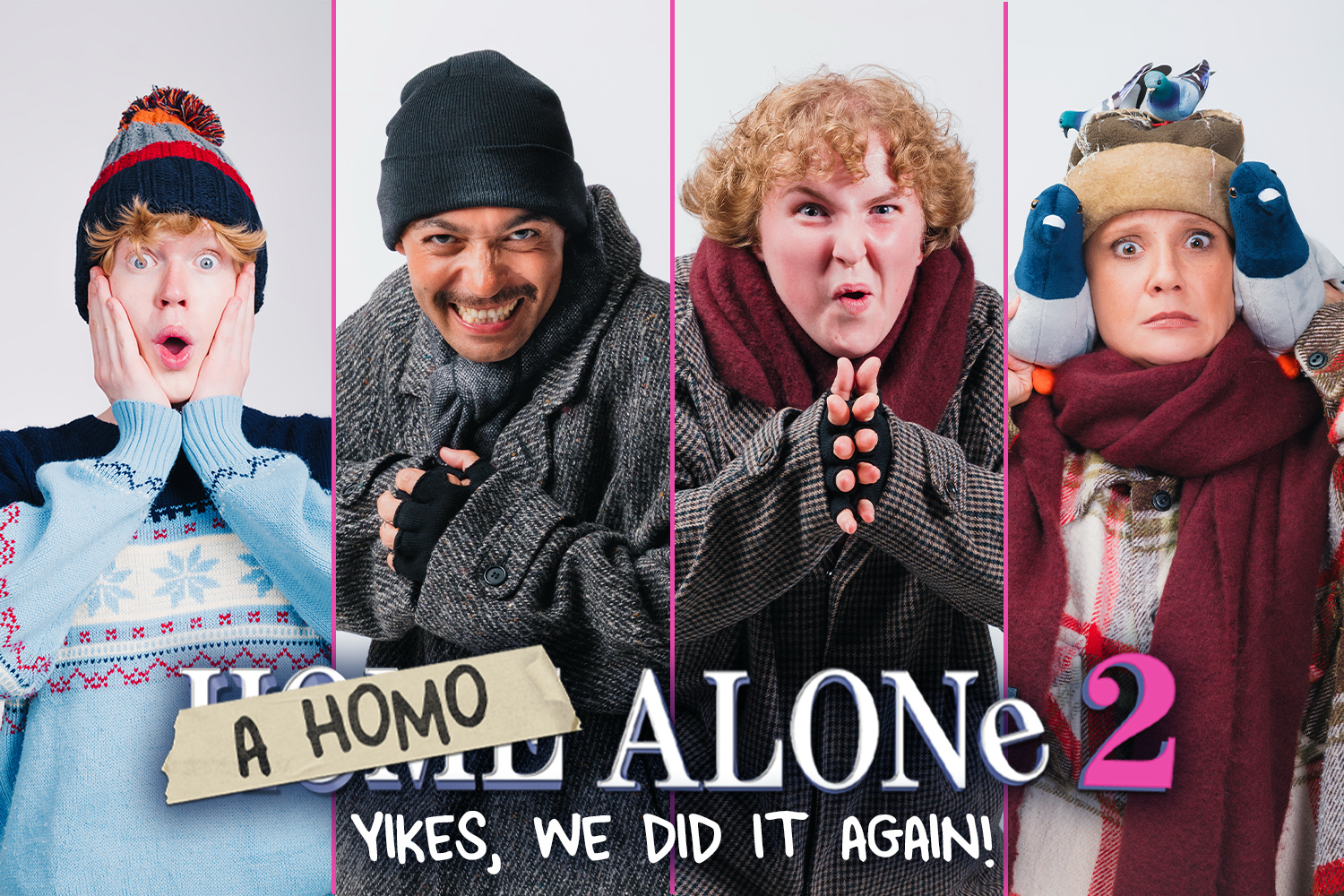
RUNNING AT THE OTHER PALACE STUDIO

FROM 13 NOVEMBER 2026 – 3 JANUARY 2027

HE’S BACK. HE’S CAMPER, AND STILL NOT BEING SUPERVISED! 
MERRY CHRISTMAS YA KINKY ANIMALS!

Remember the sold out hit ‘Homo Alone’ back in 2024? Well good news, Kevin is back for more as he returns to The Other Palace Studio for A Homo Alone 2: Yikes, We Did It Again! 

Kevin will be played by Thomas John Stocks with the multi-rolling Jenny Bede (Prince Andrew: The Musical) as Kevin’s Mum, Bird Woman, and Cedric the Bell Boy, Jermaine Woods (The Producers) as Kevin’s Dad, Harry, and the Hotel Manager, and Charlotte Dixon as Buzz, Marv and…Trump (someone genuinely had to this time…)

After last year’s Lovers Actually, The Other Palace Studio’s best-selling show ever, Jodie Prenger (Coronation Street, I’d Do Anything) and Neil Hurst (Fat Friends The Musical, Casualty) reunite with Kevin McCallister for the highly anticipated sequel parody of the beloved holiday classic AHomo Alone 2: Yikes, We Did It Again! You might be too old for a lot of things, but you’re never too old for a naughty, festive theatre treat at Christmas!

Camp Kevin. Lost in The Big Apple. With Dad’s credit card in hand, bébé Kevin has arrived, lost and unaware, in New York City, the gayest place on Earth! What could possibly go wrong? Throw in a couple of dodgy burglars, a Rocky Horror-esque hotel manager, and a Trump cameo nobody asked for and you’ve got yourself one hell of a Christmas night out.

Jodie Prenger says:

“Did you say KEVIN?! Well, he’s back and this time, in New York City! He’s older, more mischievous and has been left to his own devices one more time (a bit like the writing team!). And don’t worry if you missed the first instalment, you won’t have to have seen Homo Alone to join the party, but be warned that sweet childhood memories may be at risk! Intrigued? If you are, why not tell Santa that instead of presents this year, you just want tickets to see A Homo Alone 2 – even though you may end up on the naughty list.”

Homo Alone 2 is directed by comedian Laura Checkley (Detectorists), with choreography by Philip Michael Thomas (RAGS The Musical); musical direction and arrangement by Tom Noyes (Love Quirks); design by Reuben Speed (Deep Heat Rivalry); lighting design by Matt Hockley (Redcliffe) and sound design by Tom Jervis (Why Would We Care).

His parents might’ve forgotten him again, but you won’t. Not with this upbeat, filthy-fun musical parody kicking off your crimbo.
Incendiary Review

Wilton’s Music Hall, London – until 8th December 2026

Reviewed by Phil Brown

5*****

Although historical events are not uncommon as themes for stage shows, Incendiary is possibly unique in British theatre by featuring the narration of an important historical artefact – Samuel Pepys’ seventeenth century diary – centre stage.  The motivation for this show seems altogether more Reithian than typical entertainments which mine the past, and includes contemporary songs and tunes played on contemporary instruments.  Whilst richly entertaining, everything about it conveys serious art.  This lends a genteel, cerebral, salon or soiree like feel to the evening enhanced by the period charm of Wilton’s – a gloriously battered survivor of London’s theatrical past

I have to disagree with the otherwise excellent programme notes that Pepys Diary is the most remarkable account we have of ordinary lives in extraordinary times.  Yes the times (1660 – 1669) were indeed extraordinary – the return of Charles II to the throne, war with the Dutch, the plague and the great fire of London – but Pepys was no ordinary man, and the show itself hardly reflects on “ordinary life” outside of these major events.  As the diary, originally written in a form of shorthand, runs to 6 bound volumes, no doubt, a lot of material has been omitted, but the somewhat haughty way Pepys is portrayed, suggests he wouldn’t have been too interested in ordinary life – at least when it’s not of direct benefit to him.  Having said that, his diary does mix in the historically significant with the everyday and big picture stuff with the detail.

Pepys ended his daily journal entries mid 1669 at age 36 for fear the combination of his official work and late-night shorthand writing was ruining his eyes. He did live for another 34 years however, and the show takes us up to his death in 1703.

Deidre Shields, who wrote this work has found a rich seam of inspiration for theatre and is producing something wonderful with it.  Incendiary reminded me very much of something seen earlier in the year at Wilton’s – By A Lady – The Life and Wit of Jane Austen and sure enough, on checking, I find the same creative team at work – Hambletts theatre production company.  

Shields has skilfully adapted Pepys’ words to tell a fascinating and revealing human story with wit, nuance and the occasional ‘punchline’ that resonates with a modern audience.  An example of a clever detail is the programme title with the ‘diary’ part of Incendiary printed in red.  The narration by Edward Bennett playing Pepys is quite superb.  

The two act show consists of segments of narration interspersed regularly with music of the period  – sometimes brief snatches of punctuation but mainly full songs or tunes, nine in each act.  These are ‘broadside ballads’ (a single sheet of cheap paper printed on one side, often with a ballad, rhyme and news) or compositions by John Dowland, Henry Purcell, Thomas Campion and Pepys himself.  (He loved music and learned the guitar in later life).

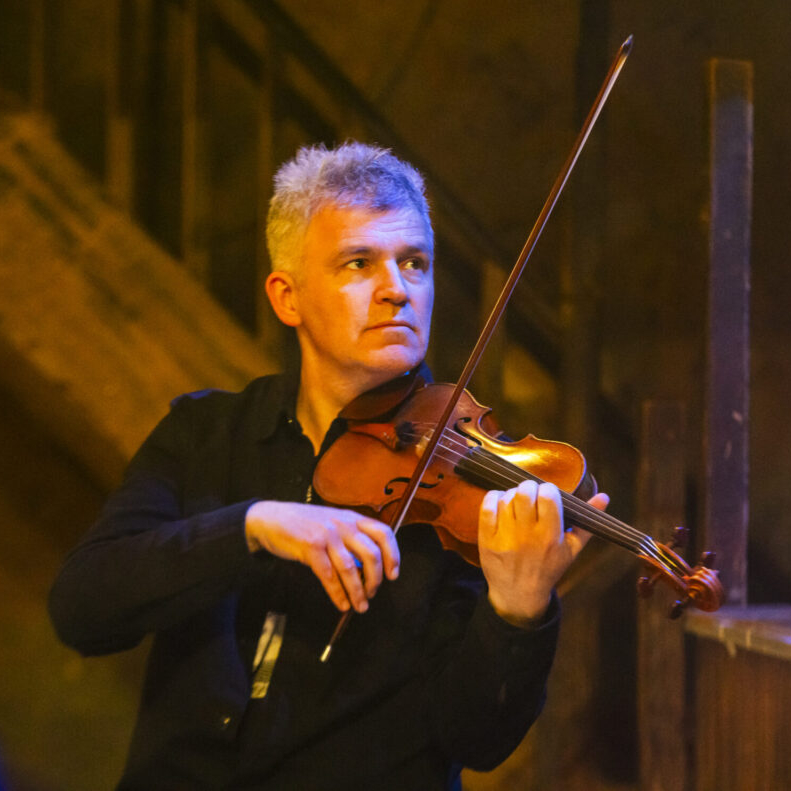
The Hambletts creative team of Shields (writer), Judy Reaves (director), and David LePage (music director, arranger and violinist) has devised a beautifully constructed piece of theatre from words to music.  In the hands of the superlative performers, this is turned into an evening of pure magic and rapturously received by the audience.

Staging is pared down to utmost simplicity.  Out front is a lectern from which Bennet, dressed like the musicians, in a white linen tunic style shirt vaguely of the period pronounces as Pepys.  Seated either side are David LePage (violin) and Nick Stringfellow (cello).  Tiered behind are two contenders for unofficial star of the show – Grace Davidson (soprano voice) and lutenist extraordinaire Daniel Murphy – both wonderfully gifted musicians performing at their peak.  

The crystalline purity of Grace Davidson’s soprano is breathtaking.  She also takes on the speaking role of Elizabeth Pepys – Samuel’s wife from around age 14 until she died of typhoid aged 29.  Although Pepys commissioned prominent sculptor John Bushnell to erect an elaborate white marble bust to Elizabeth in his local church St Olave’s, and never remarried, Pepys had an occasionally strained relationship with her.  And he was just as energetic in his philandering as he was in other activities (including discourse and wine), and not above using coercion and position to gain sexual favours.  Given Pepys’ behaviour towards women, Shields and Reaves decided to give ‘my wife’ – Elizabeth – a voice in the show to highlight this less savoury aspect of him.  It would bear even more of Elizabeth’s voice.

Incendiary is riveting, epic entertainment – an absolute joy from first to last.  It’s an ingenious concept to start with, artfully moulded into a witty and intoxicating stage show of words and music, and brilliantly performed on the night.  I thoroughly enjoyed absorbing more knowledge of seventeenth century history in 2 hours than in several years of school history classes…    

East is East Review

Glasgow- Citizens Theatre – until 17th October 2026

Reviewed by Marcus Richardson

4****

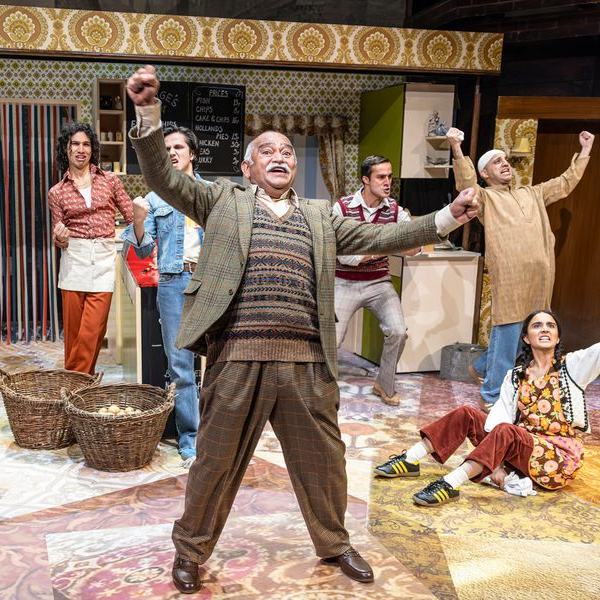
‘East is East’ still is a relevant story. It’s a tale of identity, of change, and a family, something intrinsically human. This 1996 play explores the Khan family living in Salford during the 1970s, a mixed-race working class family. Written by Ayub Khan Din, this comedy gives us a glimpse into a complex situation, with an easy to follow narrative. At times the play is heartwarming, or hilarious, or even shocking. The Khan family own and work in a chip shop, where their six children also work.

The director, Kash Arshad, weaves his own passions into the play, he brings this story to life by capturing the emotions of the scenes in a truly wonderful way. There is one scene where two characters are dancing to music while cleaning up the chippy that just shines, its playful, unburdened, and simple. The Matriarch of the Family is Ella, played by Samantha Powers, is trying to keep the family together, trying to let her children flourish. Powers is really a standout, the ability to perform in such a natural way makes us really attach to the character. She works wonderfully with the rest of the cast, Power feels attached to whoever she’s performing with wife, mother, and friend. Her Husband George, played by Bhasker Patel, brings a majority of the drama within the play, wanting to keep tradition, expecting his children to follow his word. Patel balances this character really well, he’s a family man, he loves his wife, and at times really funny. Patel understands this complexity really well, George a first-generation immigrant living in 1970s Britain, the character offers a wide audience of what was, and is, a reality for some south asians. The Six children, Abdul, Tariq, Maneer, Saleem, Meenah, and Sajit, played by Danyal Ismail, Zaki Ali, Joeravar Sangha, Matthew Khan, Maya Dhokia, and Rohan MacLeod respectively. As a chaotic collective the work really well together they’re messy, they fight, but they’re family they deeply care for each other. Ismail acts as the voice of reason as the eldest of the six, he appears to be stable within the family dynamic, there is a scene where Ismail shows the internal conflict of the character, and it brings silence from the audience, we were captured. Ali, playing Tariq, the most rebellious of the children, offers a narrative that highlights the children’s relationship with their mixed-race identity and their father. Played in a boisterous way, Ali brings in a fiery energy to the play. Sangha, playing Maneer, who is most connected to his muslim and South Asian identity, Sangha was one of the two characters dancing I mentioned earlier, Sangha had some really good moments of physical comedy. Khan, playing Saleem the artist, a college student who aspires to be something that his father wouldn’t approve of. Khan, plays the character like he is the most normal of the group, which is all thrown out of the window in the final scenes with such comedic flair. Dhokia, playing Meenah, really is one of the boys, she is just like her brothers. Dhokia is also the other dancer I mentioned earlier. MacLeod, playing Sajit is the outlier of the siblings, a character with additional-support needs, however they didn’t have the terminology in the 70s. MacLeod has a difficult task with this character, known to his siblings as ‘Twitch’, I think he did a good job, there’s a scene where he is at the doctors which really made me laugh. Alongside the Khan family there is Auntie Annie, played by Victoria Brazier, who has some of the funniest lines within the play, and Brazier delivers them in such a nonchalant way. Finally in the cast there is Sushil Chudasama, who plays the Doctor and Mr Shah, both characters are polar opposites so its nice to see Chudasama handle them really well.

I throughly enjoyed East is East, even 30 years on it still has a narrative that doesn’t feel dated or irrelevant. The cast, and crew have done such a fantastic job bringing this play to life, and I hope they bring as much joy and knowledge to the other people going. It is on at the Citizens Theatre until the 17th October, and will be heading to Derby, and Salisbury

London City Ballet Review

Cambridge Arts Theatre, Cambridge – Wednesday 7 October 2026

Reviewed by Steph Lott

5*****

London City Ballet‘s mixed bill at Cambridge Arts Theatre offers audiences a compelling bridge between classical heritage and modern contemporary movement. Four very different pieces—ranging from playful classicism to profound meditations on mortality—showcased the breadth of ballet and the extraordinary fragility and strength of these remarkable dancers.

The programme varies depending on which performance you attend, but this is what I saw.

Mephisto Waltz Ashley Page’s “Mephisto Waltz” opened the performance with exactly what I associate with ballet: graceful, playful movement, perfectly complementing Johann Strauss II’s music. The dancers moved with such elegance, and beautiful costumes added to the sense of joy. It was accessible, charming, and a wonderful way to begin the programme.

Soon Tasha Chu’s “Soon” presented a complete emotional shift. This intimate duet between Sahel Flora-Pascual and Siméon Sorange-Félicité felt like witnessing something intensely private. Opening with a sombre couple standing before a figure in a white coat—a doctor? —who promptly leaves the stage, the piece captures the anticipation of grief. Set to Sam Robinson and Gavin Bryars’ haunting “Jesus’ blood never failed me yet,” the couple wrap themselves around each other, as they digest the information just imparted. The strategic lighting and brown, shadowed staging create an atmosphere of introspection. Like the evening’s other contemporary pieces, it profoundly affects the viewer.

Quiet City Jerome Robbins’ “Quiet City” deepened this meditative feeling. Set to Aaron Copland’s melancholic 1940 score, this work—created in 1986 in memory of New York City Ballet dancer Joseph Duell—features a central male figure accompanied by two men (Joseph Taylor, supported by Samuel Barzaghi and Arthur Wille) and watched over by nine mourners. Robbins’ polished classical choreography evokes a stately, reverential farewell. Taylor gracefully moves through searching, yearning sequences while beautiful shapes and poignant moments punctuate this soulful work. Another profoundly affecting piece suggesting a bridge between life and death.

Firebird Glen Tetley’s “Firebird”, set to Stravinsky’s iconic score, was the evening’s showstopper. Tetley created a contemporary twist to this classical work which is perfectly performed by this cast. Ellie Young lights up the stage as the Firebird, dance flowing from her strong and impossibly flexible form. It is impossible to take your eyes off her. Her duets with Ivan (Joseph Taylor) crackle with chemistry and genuine connection. Arthur Henderson is suitably creepy as Kotschei, the threatening patriarch.

Olivier Award-winning designer John MacFarlane’s revived costumes for this piece are stunning: from Kotschei’s skeletal, unsettling form to the Firebird’s vibrant red, yellow, and orange streaks. Behind them, a projected backdrop shifts imperceptibly through bruised blues, greys, and muted autumnal tones. This adds to the unsettled atmosphere of this piece.

Throughout, I was struck by how ballet dancers embody a paradox: simultaneously delicate and extraordinarily strong. This programme brilliantly showcased that duality. Definitely go and see London City Ballet if you get the chance. This is the second time I have seen them at the Cambridge Arts Theatre and I am so pleased for them that their revival is going so brilliantly.

Heathers The Musical Review

Curve Theatre – Until 10th October 2026

Reviewed by Amarjeet Singh

3***

With a new musical, you generally know what you’re getting. In the case of Heathers the Musical, that means huge songs, teenage angst, dark humour and a story that has built a fiercely loyal fanbase. It’s a blockbuster of a musical, driven by a sharp script and a score packed with memorable numbers.

This production is certainly energetic. From the moment Beautiful explodes onto the stage, Westerberg High is brought to life in a riot of colour, movement and attitude. Andy Fickman’s direction keeps the pace high, while Gary Lloyd’s choreography ensures there is rarely a still moment. Combined with David Shields’ vibrant design, Ben Cracknell’s punchy lighting and Dan Samson’s crisp sound design, the show looks and sounds fantastic.

Kevin Murphy and Laurence O’Keefe’s adaptation remains the show’s greatest strength. Following Veronica Sawyer’s rise through Westerberg High’s pecking order and her increasingly toxic relationship with JD, the story combines biting humour with some surprisingly uncomfortable themes. Bullying, suicide and the need to belong all sit beneath the surface, giving the show more substance than its candy-coloured exterior initially suggests.

The score sounds superb throughout, with Seventeen, Our Love Is God, Dead Girl Walking and Kindergarten Boyfriend all receiving the powerful treatment they deserve.

There is no question this company is talented. Unfortunately, some of the character choices stop the production from reaching the heights this material is capable of.

As Veronica Sawyer, Gerardine Sacdalan possesses an undeniably impressive voice, but the characterisation feels strangely at odds with the role. Veronica repeatedly flits between simpering soprano and overexcited toddler, stripping away much of the sarcasm, intelligence and cynical wit that defines her. The performance often feels affected and, as a result, several important story beats fail to land with the emotional impact they need. Musically elongated, almost operatic phrasing frequently jars against a character who should feel sharp, quick and grounded.

A similar issue extends to Louis Hearsey’s JD. While the vocals are strong, the interpretation feels peculiar. The constant twitching, jerking and pulling at clothing becomes distracting, leaving us with a JD who feels more agitated than dangerous. Missing is the dark charisma and wounded magnetism that makes the character such a compelling presence and makes Veronica’s attraction to him believable.

Elsewhere, the production finds stronger footing with the supporting characters. Liberty Stottor captures Heather Chandler’s confidence and cruelty well, while Lou

Henry brings warmth and vulnerability to Heather McNamara, particularly during Lifeboat. Jessica Ibadin never feels entirely comfortable as Heather Duke. Veronica Carabai wins over the audience as Ms Fleming, particularly through some excellent ad-libbing and a hilarious exchange with an audience member. Sophie Manners is a likeable Martha and brings a sincere emotional quality to Kindergarten Boyfriend without pushing the sentiment too far.

There is still plenty to enjoy here. The cast throw themselves into the material, the ensemble maintain the show’s momentum throughout, and the songs remain among musical theatre’s most entertaining. Yet Heathers lives and dies by its central relationship, and when Veronica and JD fail to fully convince, the show’s emotional core suffers. Visually vibrant, musically strong and overflowing with energy, this is still an enjoyable evening of theatre. However, some baffling performance choices prevent it from becoming the knockout punch that Heathers the Musical can and should be.

HOW SOON IS NOW? REVIEW

STORYHOUSE, CHESTER – UNTIL WEDNESDAY 7TH OCTOBER 2026

REVIEWED BY MIA BOWEN

4****

I went into How Soon Is Now? at Storyhouse with absolutely no idea what to expect. Apart from the title suggesting music, and the fact it was set in Manchester, I was going in largely blind. What I got was a brilliantly nostalgic, funny and ultimately very moving new 1990s indie musical from Manchester-based Box of Tricks.

Written by award-winning playwright Siân Owen and directed by Adam Quayle, the production transports us to New Year’s Eve 1997, as Britain stands on the brink of a new millennium. The stage becomes Deja Vus nightclub, complete with DJ booth, instruments and what appears to be a rather questionable nightclub bathroom! It feels instantly familiar — and wonderfully 1990s.

Darren Cowley, Theo Woolford and L J Willow provide the live music, while Cowley’s DJ Spin Jim is an absolute triumph. In his green tracksuit, bucket hat and unmistakable Manchester attitude, he welcomes us into the club and introduces us to its regulars. Cowley completely owns the role, creating the atmosphere and energy of the night while reminding us just how powerful music can be in transporting us back to a particular time, place or feeling.

At the centre of the story are best friends Polly (Laura Robinson), a retail worker, and Angie (Kaitlyn Akinpelumi), a health worker, celebrating New Year at Deja Vus. Their night changes when they meet Jean (Bethan McLean), a Welsh girl who has recently been dumped by her controlling boyfriend and finds herself alone, vulnerable and with nowhere to go.

What follows is a story about friendship, vulnerability, relationships and the realities of life, beautifully threaded through the music of the era, which is very much at the heart of the storytelling. Songs by The Smiths, The Stone Roses, Radiohead and Manic Street Preachers are performed live and sung beautifully by the cast, while other 1990s favourites — including New Order and The Prodigy — are woven into the club atmosphere, playing in the background just as they would on a night out in 1997. It creates a brilliant sense of time and place, while showing how a particular song can instantly unlock a memory or emotion.

For me, Bethan McLean as Jean was the standout. Watching her character find her strength as the story unfolds was incredibly affecting. By the time she stands in that beautiful party dress, only to have her boyfriend dismiss her, your heart absolutely bleeds for her.

But Darren Cowley’s DJ Spin Jim deserves a special mention too — he absolutely nailed it.

I arrived not knowing what to expect and left feeling like I’d spent New Year’s Eve in 1997 with some very memorable people. A nostalgic, music-filled night that proves a great song can take you straight back to where you were — and how you felt.

Annie Review

Everyman Theatre, Cheltenham – until 11th October 2026

Reviewed by Jacqui Radford

5*****

If you’re after a night out that lifts the spirit from the very first note, this high-energy touring production of Annie absolutely delivers. Set against the bleak backdrop of Depression-era New York, the show follows Annie as she swaps the misery of Miss Hannigan’s orphanage for a fairytale Christmas with billionaire Oliver Warbucks. This interpretation of the story is every bit as heart-warming as you’d hope.

From the moment the curtain rises, the production has a definite West End feel. The imposing set makes a big impact on the smaller stage, shifting seamlessly between the drab greys of the orphanage and the luxury of the Warbucks mansion.

Costumes capture the era beautifully and the iconic musical numbers, played by a live orchestra that doesn’t hold back, fill the theatre with a familiar warm feeling. ‘Tomorrow’ lands exactly as it should: hopeful, bright and stirring. The ensemble keeps the whole show buzzing, stitching every scene together with crisp, confident choreography that pulls the audience into every moment.

The young performers carry the show with infectious energy. Annie herself is a pocket-sized powerhouse, delivering each line with a mix of grit and sweetness, instantly endearing herself to everyone. Her fellow orphans are a riot of personality, turning ‘It’s the Hard Knock Life’ into a burst of controlled mayhem that captivates hearts instantly. Adding to the magic, Sandy the dog appears on stage with impeccable timing and irresistible charm, prompting coos from the audience every time she appears.

In this production Claire Sweeney doesn’t just play Miss Hannigan, she revels in her. She totters, mutters, and rolls her eyes with despair, turning the orphanage into a gin-soaked circus of misery. Her humour is unfiltered: sharp timing, exaggerated exasperation; and a look that tells you she’s having the time of her life.

Alex Bourne as Oliver Warbucks matches Claire’s energy. He brings a stage presence and a rich, resonant voice, shifting beautifully from tough billionaire to tender father figure. His scenes with Annie feel genuinely warm and give the story its emotional heartbeat.

This joyous performance brought the entire auditorium to its feet for a well-deserved standing ovation. It’s a timeless, uplifting show for all ages; heartfelt, funny, beautifully staged and bursting with charm. You can bet your bottom dollar you’ll leave smiling.

Sylvia Review

Birmingham Hippodrome- until 10 October 2026

Reviewed by Emma Millward

5*****

Sylvia has arrived at Birmingham Hippodrome with a bang. With book by director and lyricist Kate Prince and Priya Parmar and music by Josh Cohen and DJ Walde, this vibrant musical brings the story of Sylvia Pankhurst and the suffragette movement to the stage through a striking combination of music and storytelling.

Naomi Katiyo is excellent in the title role, capturing the personal conflicts that arise as she develops her own political beliefs that the suffragettes should fight for the rights of everybody, not just women. Beverley Knight is equally impressive, reprising her Olivier Award-winning role as Emmeline Pankhurst. The chemistry between the two leading ladies is apparent from the first scene, and their vocals are incredible to witness live.

The music within the show is often unexpected, covering many styles including funk, hip hop and soul, and comparisons to Hamilton are inevitable. ‘March Women March’ and ‘Suffrajitsu’ were my musical highlights, showcasing the production’s ability to combine contemporary musical styles with its historical setting. Kate Prince’s choreography was crisp and precise throughout. This is particularly effective during the fighting sequences, where the sharp timing and controlled movement create real theatrical impact.

The production finds plenty of humour in its comic portrayals of well-known historical figures. Castell Parker is particularly entertaining as Winston Churchill, while Kenedy Small steals every scene as his mother, Jennie Churchill, bursting onto the stage singing over a drum and bass-infused beat. Collette Guitart as Clementine Churchill comically puts the men around her in their place while still standing by her husband. Ebony Clarke as Emily Davison captures her determination and eccentricity before her increasingly ill-fated campaign takes a much darker turn. Ivano Turco is delightful as Silvio Corio, with his relationship with Sylvia explored through the soulful song  ‘Sylvia, Silvio’, which brings a more intimate side to Sylvia’s story.

Visually, Sylvia takes a darker approach. The set, designed by Ben Stones, makes effective use of movable boxes. A large screen forms the back wall, providing changing imagery that adds atmosphere while also helping with narration. Natasha Chivers and Hector Murray’s lighting complements this effectively, while Andrzej Goulding’s video and animation give the production a cinematic quality. The instantly recognisable suffragette costume design, also by Ben Stones, works particularly well against the darker set.

The auditorium was certainly lively, with the ladies sitting behind me responding with laughter, cheers and whoops throughout the performance. Rather than detracting from the experience, their enthusiasm added to the infectious atmosphere in the theatre and was a clear indication of just how much fun people were having with the production.

If there is one area where Sylvia could be possibly be tightened, it is the running time. At around two hours and fifty minutes including the interval, there are moments when it begins to feel slightly stretched. That said, this is a relatively minor criticism of a production that delivers on almost every other level. With outstanding vocals, precise choreography, striking visuals and a cheeky sense of humour, Sylvia succeeds in making its historical subject feel accessible and thought-provoking.

Powerful and thoroughly entertaining


Wilko Review

Theatre Royal, Windsor – until 10th October 2026

Reviewed by Andrew and Kate Lawrence

4****

“You don’t have to live forever; you just have to live!”

John Wilkinson, better known as Wilko, was the acclaimed lead guitarist of “Dr Feelgood”, a band he co-founded that become one of the biggest punk bands in Britain during mid-1970s.

“Wilko”, the play, written by Jonathan Maitland, tells his story, from his early childhood, growing up in Canvey Island, his school and university education, meeting the love of his life and of course the many bands he formed, joined and departed throughout his colourful “rock-and-roll” career. Then, when diagnosed with terminal cancer, the play explains his euphoric transformation and exploration of everything it means to be alive, summed up succinctly in his own life lesson statement – “You don’t have to live forever, you just have to live!”

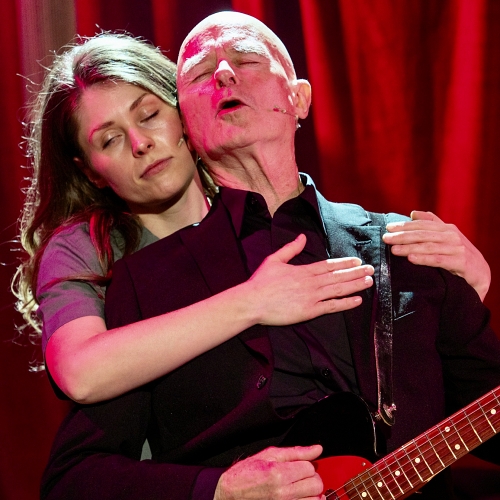
The play is a monologue delivered by Wilko, played by Johnson Willis, where he describes his story, but delivered in his cockney-Essex drawl style native tongue. An accent which disguises his academic prowess, his knowledge of books and ancient Icelandic poetry, but lands perfectly with your expectations of a punk rock guitar hero.

While music, and in particular punk-rock music, features heavily into this story, including the various interludes of Dr Feelgood hits performed by the talented cast, those performances are, in our opinion, not as “punk rock” as the original beast. Nevertheless, they do add context to the story telling and demonstrating how talented the cast are.

It’s another one of those plays where five actors play the parts of maybe 10 characters throughout the story. Jon House, playing Lee Brilleaux, the lead singer in the band plus other bit parts; Georgina Field, playing Sparko the bass guitarist, and again other bit parts; David John, playing ‘Big Figure’ the drummer and more parts and finally Lara Lemon mostly playing Irene Knight, Wilko’s wife. The acting is superb, and the band performances are commendable.

What certainly does shine through, is how Wilko delivers a very personal perspective on his own life and his transition from living in the fast lane, enjoying the spoils of sex, drugs and rock-and-roll, to becoming a terminally ill cancer patient and living life in full and totally in the present. A life lesson that perhaps we should all learn from.

By Royal Appointment Review

Nottingham Theatre Royal – until 10 October 2026

Reviewed by Louise Ford

4****

I just stand still and you colour me in….and don’t forget the Queen of Sheba lipstick.

In the  bar last night ,at the Theatre Royal, there was a fair sprinkling of sequins and platform boots, not the audience for the new offering at the Theatre Royal but the audience at the Concert Hall, next door (Mamma Mia! The Musical). The juxtaposition of the two audiences was a good illustration of the importance of clothing as an identifier and for sending a message about who we are and which tribe we belong to.

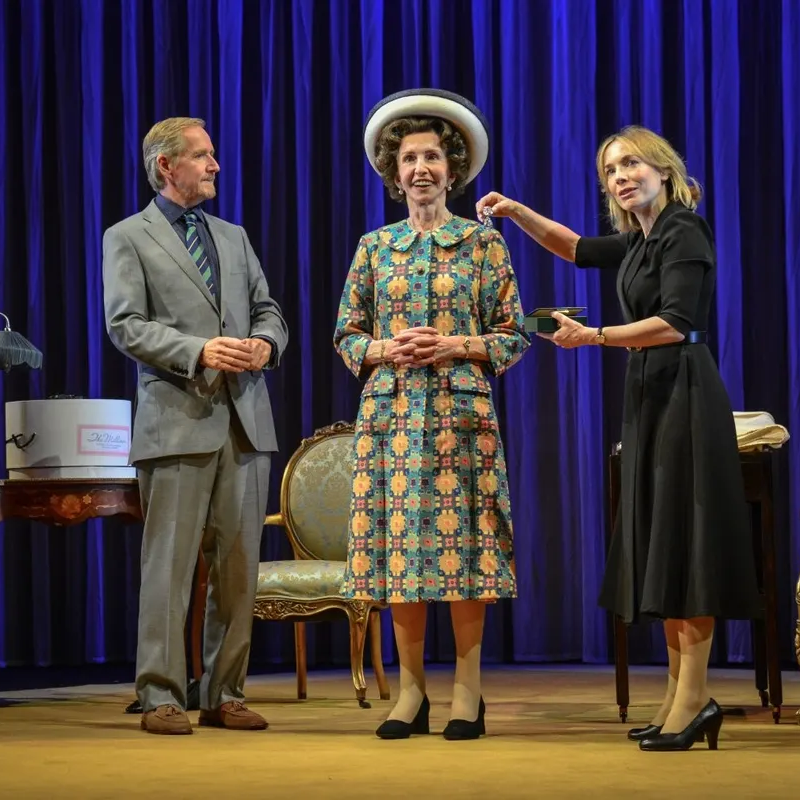
By Royal Appointment is Daisy Goodwin’s debut stage play, which first aired last year. It is a behind the scene look at the Queen (Jane Asher), her Dresser (Laura Main), her Designer (David Robb) and her Milliner (Matthew Cottle).

It is loosely based on the true story of Angela Kelly who was the late Queen’s dresser. The story draws on the ancient tradition of those closest to the Monach having both power and influence. Although in this play the power lies with the clothes that the Queen wore to a variety of State and public events and the team that put them together.

The play starts at the funeral in 2022, a lone figure in black on the edge of the ceremony. We meet Gigi, who was the late Queen’s Dresser, quietly weeping and mourning the loss of her employer. Her grief is interrupted by the Curator (Laura Matthews), who has been tasked with putting together an exhibition of the Queen’s outfits, unfortunately the official records are incomplete. Does the Dresser have any records of what was worn and why? Of course she does ….. and we start with the Investiture of the Prince of Wales in 1969. Each outfit is put into context by the Curator who does an introduction with key events for the particular year.

To add some extra context there are discussions between the Designer and the Milliner, sometimes these are deeply personal. We learn a little about their backgrounds and personal relationships. At other times it is about the Royal Family and some key events.
All of the audiences and discussions take place in the Queen’s State apartments and a simple sheer curtain helps show case the outfits . The curtain is at times flooded with colour to highlight the outfit being discussed. The set (designer Jonathan Fensom) is static and doesn’t distract from the interactions on stage.

Jane Asher plays the Queen with a quiet calm and elegance. Her transformation as the Queen ages is done with sensitivity and care. Asher is dressed for the most part in a simple tailored dress which is a nondescript “beige”, she fades into the background . However when she tries on her outfits she becomes the central focus of the stage. Thus illustrating the importance of not only being seen but also easily identified.

In contrast Gigi is clad in a smart tailored black dress and is a forthright Northerner ( from Wigan), she grows in confidence as the play progresses and isn’t afraid to speak her mind or make suggestions ( she is the keeper of the Queen’s jewels) for accessories. Towards the end of the play her dreams and ambitions are realised.

My only reflection on the story is that I’m not quite sure what the main focus was so at times it felt a little disjointed.

The show is informative and understated. You are drawn into a private world of privilege, power, intrigue and unlikely friendship. There is also a nice sprinkle of humour, with the Queen becoming quite animated when one of her horses nearly wins the Grand National.