Arena Theatre, Wolverhampton – Thursday 24th September 2026
Reviewed by Nadia Dodd
4****
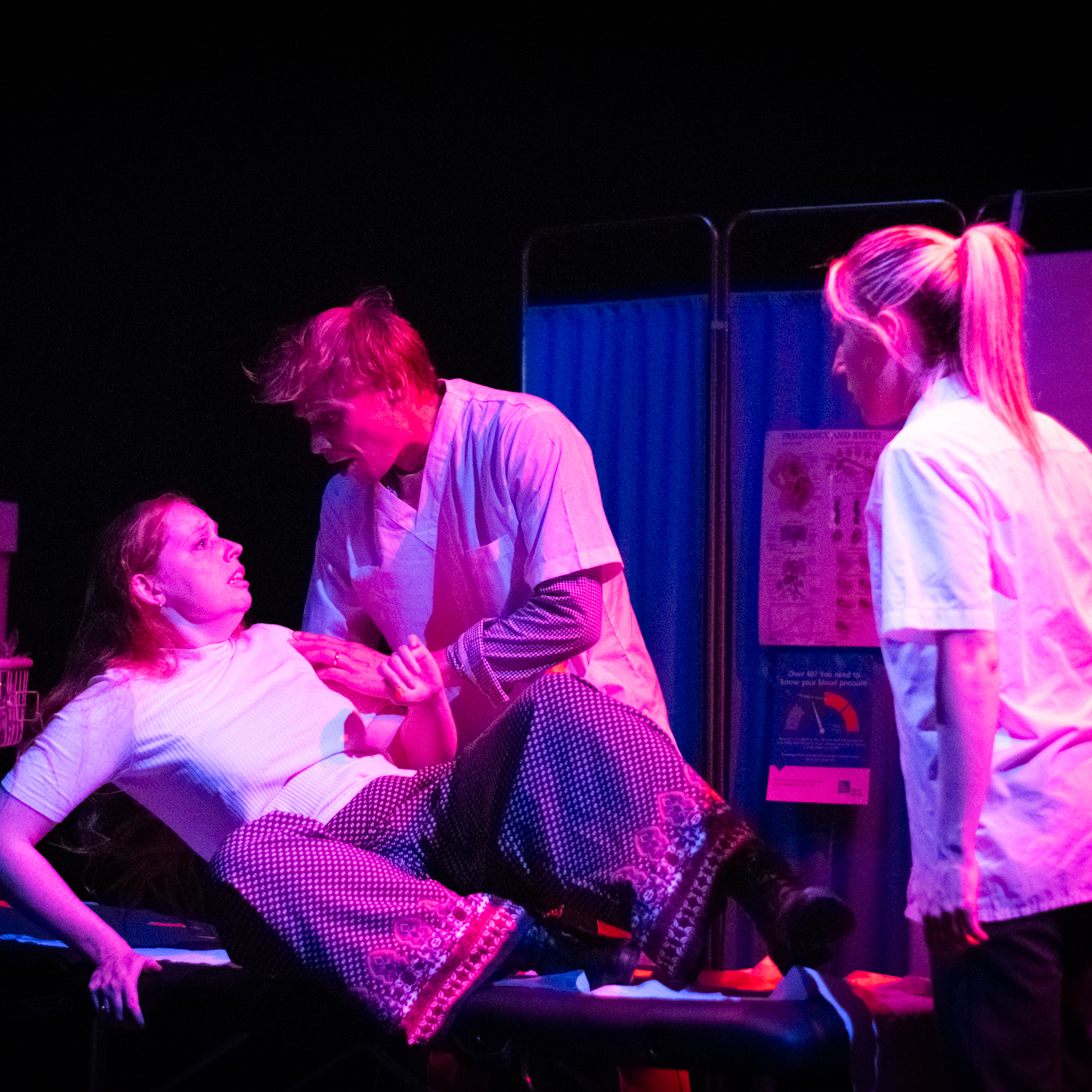
For a three-person production, Tell Me Where It Hurts was gripping from start to finish.
I had never heard of PMDD (Premenstrual Dysphoric Disorder) before this evening. After watching the play, I came away with a much greater understanding of what it is and how much it can affect lives.
Written by Tayla Kenyon and presented by Teepee Productions and Joe Brown, Tell Me Where It Hurts is a funny, touching and very human comedy-drama. It explores PMDD, mental health, relationships and, most importantly, what it feels like when nobody seems to be listening.
At the centre of the story is Chrissy, (Stephanie Booth) a dedicated drama teacher trying to keep her work, her relationships and her emotions under control. Alongside her is Annie, (Tayla Kenyon) a talented but troubled student hoping to win a place at a prestigious performing arts school. Chrissy’s husband Nathan (James Scofield), we see how difficult it is for him to watch someone he loves struggle while not always understanding what she is going through.
You can sense the effect Chrissy’s PMDD has on their relationship too. It isn’t easy for either of them. Nathan is trying to understand something that he cannot see or fully experience himself, while Chrissy is trying to cope with something that can completely overwhelm her.
What I found particularly touching was that Nathan’s character shows that PMDD doesn’t just affect the person living with it. It can affect partners, families and the people who are trying their best to help.
As their stories unfold, we see two women who, in very different ways, are struggling to be heard and understood.
What I really liked about this production is that it tackles such a serious subject without becoming a lecture. There is plenty of humour, and often it comes just when you need it.
The funny moments don’t take away from the more difficult parts of the story. Instead, they make the characters feel real. After all, that’s life. You can be having the worst day imaginable and still find yourself laughing at something completely ridiculous.
The three performers bring warmth and vulnerability to their roles. Chrissy’s experiences are particularly affecting. We see her trying to explain that something isn’t right, while struggling to get other people to understand what she is going through.
The play also highlights how easily women’s health problems can be dismissed or misunderstood.
What makes the story even more powerful is that it doesn’t give us perfect characters with easy answers. They are complicated, emotional, sometimes frustrating and occasionally make mistakes — in other words, they are human!
There are moments that hurt, moments that make you laugh and moments that make you sit quietly and think.
By the end, I found myself thinking about how important it is to listen a little more carefully, judge a little less quickly and perhaps ask someone we care about a very simple question:
“Are you actually okay?”
Tell Me Where It Hurts doesn’t promise easy answers. What it does offer is empathy, humour and a reminder that sometimes, simply being heard can be the beginning of feeling better.