
Curve Theatre Leicester – 4th July 2026
Reviewed by Amarjeet Singh
2**
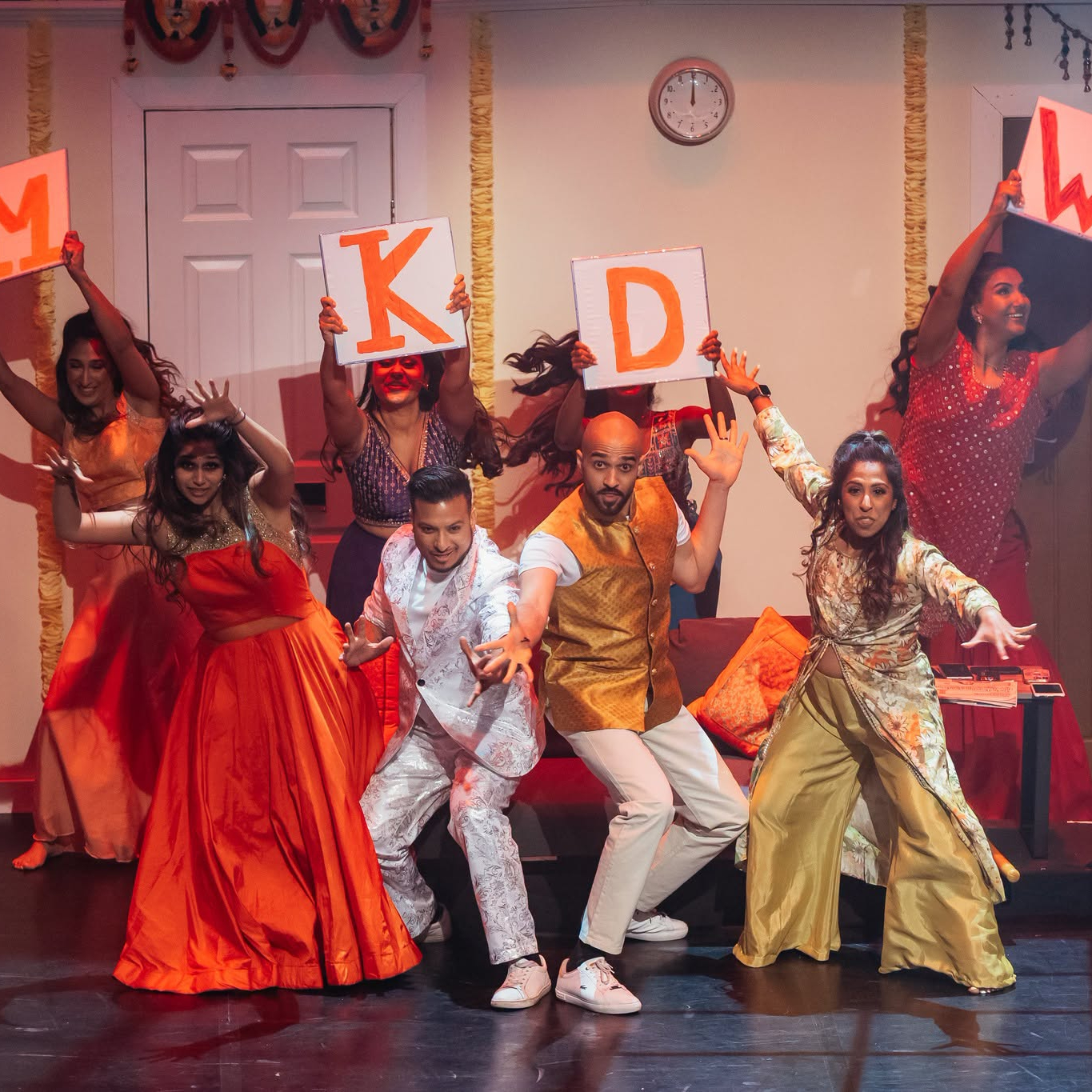
Mrs Kapoor’s Daughter’s Wedding 3: The Murder Mystery arrives with an appealing premise. The third instalment of Archana Kumar’s popular British Asian comedy series promises an immersive evening in which the audience becomes detective, questioning suspects, examining clues and solving a murder that interrupts a lavish family wedding. On paper, it sounds like a lively blend of comedy, mystery and audience participation, but in reality, the show struggles to deliver on any of these promises.
The central problem is that the production never quite comes together as a coherent whole. As both director and scriptwriter, Archana Kumar struggles to maintain narrative clarity, resulting in a show that feels remarkably unfocused. The script is poorly structured, with scenes often appearing disconnected from one another and key plot points either underdeveloped or forgotten entirely. Story continuity is inconsistent throughout. Faheem Mohammad’s Mr Kapoor much-publicised disco toilet functions enthusiastically when a joke requires it yet becomes an ordinary toilet whenever the plot moves elsewhere. Similarly, Bhavna Patel’s Mrs Kumar confiscates everyone’s phones, only for certain characters to seemingly regain access to them later without explanation. Manju, played by Vallisa Chauhan, is built almost entirely around taking selfies and obsessively talking about social media. While there is comic potential in satirising influencer culture, the joke never develops beyond the same recurring gag and offers no clues. These may sound like small details, but in a murder mystery, internal logic matters. When the audience is expected to pay close attention to evidence, visible inconsistencies quickly become distractions.
That issue extends to the mystery itself. If clues were present, they were often as difficult to follow as the plot. During the audience participation section, when spectators were invited to identify the culprit, one audience member confidently shouted “Manoj”, despite there being no character by that name. It was a moment that unintentionally summed up the confusion in the room. Rather than building suspense or rewarding attentive viewers, the script leaves audiences struggling to distinguish genuine clues from narrative loose ends.
Comedy is equally hit and miss. Some jokes generate warm laughs, but many are stretched far beyond their natural lifespan. Repeated references to Keir Starmer and the Royal Family quickly lose their impact through overuse. Timing is another challenge. Several punchlines are rushed, with performers moving straight into the next line before the audience has processed the previous one. As a result, jokes that might have landed instead drift past unnoticed.
Special effects are deployed so frequently that they cease to feel special. Video screen sequences add further clutter yet contribute little to the storytelling. Their amateur editing and unclear purpose make them feel detached from the stage action. Likewise, the dubbed voice-over sections are muffled and confusing, creating unnecessary obstacles to following an already complicated narrative. Rather than tightening the show, the direction often seems to amplify its weaknesses, layering distractions onto an already overcrowded script. The characters themselves rarely progress beyond broad caricature. Mrs Kapoor, played by Manoj Kerai, is a one-note figure punctuated by jarring tuts. Unfortunately, much of the humour rests on those limited traits. Vinesh Barber’s Groom and Bavine Baichande’s Detective are similarly defined by exaggerated characteristics rather than meaningful development. The cast work hard throughout and there is enough commitment on stage to suggest stronger material could produce far better results.
The evening’s saving grace comes from its musical elements. The tabla and harmonium players are exceptional. The dance sequences are a particular highlight, performed with skill, confidence and infectious joy. Archana Kumar’s choreography is polished and engaging, providing some of the show’s most memorable moments. Admittedly, these sequences often feel detached from the surrounding narrative and occasionally emerge without warning, but they are consistently entertaining.
As an interactive murder mystery, there is surprisingly little meaningful audience interaction. As a comedy, the pacing is uneven. As a mystery, the plot is difficult to follow. Despite the evident effort of the cast, musicians and dancers, the show is undermined by a weak script and unfocused direction. Most disappointing of all is the ending, which abandons any sense of carefully constructed intrigue in favour of a hurried explanation that feels both nonsensical and unearned. New elements are thrown into the mix at the last moment simply to connect the dots somehow, creating the impression that the writers are scrambling to reach a conclusion rather than naturally arriving at one. Rather than rewarding the audience for following the story, the finale raises further questions and leaves the resolution feeling arbitrary. A sharper editorial hand, clearer storytelling and greater attention to continuity could transform it. In its current form, this well-meaning wedding celebration leaves too many guests searching for answers that never arrive.