
Sheffield Lyceum – until Saturday 9th May 2026
Reviewed by Claire Moore
4****
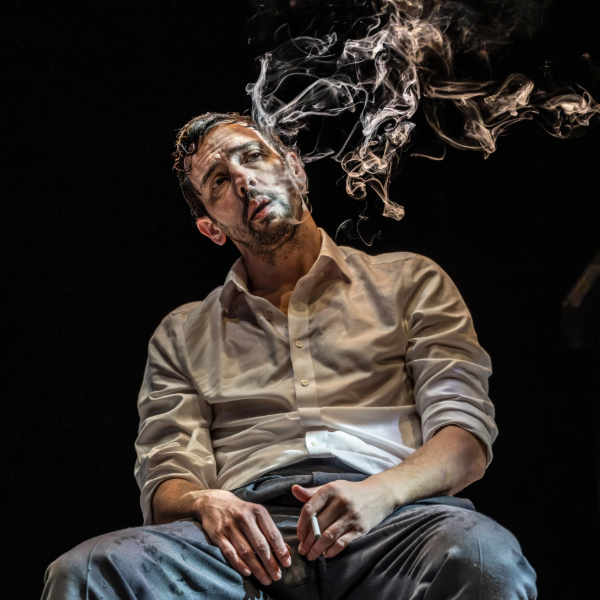
The Spy Who Came In From The Cold brings one of John le Carré’s best-known novels to the stage for the very first time. This Cold War thriller takes us into a world of espionage, double-crossing and moral grey areas, where nobody quite knows who can be trusted.
Disillusioned British intelligence officer Alec Leamas (Ralf Little) is ready to leave the world of spying behind him, until George Smiley persuades him to take on one final undercover mission against the East German Secret Service. But as the lines between truth and deception begin to blur, and new relationships develop, Leamas finds himself questioning far more than just the mission.
The book has been a global bestseller for more than six decades, but I have to confess I’m one of the few people who had never read it or seen any of the adaptations. Add in the fact I’d only ever seen Ralf Little in comedy roles before, and there were quite a few firsts for me going into this production.
Adapted for the stage by award-winning playwright and screenwriter David Eldridge, the production manages to make a very complex story feel surprisingly accessible. There’s a lot to fit into a running time of under two hours, but the use of clear explanations from Leamas helps the audience keep up with the twists and turns of the plot without it ever feeling too heavy.
The set is simple but effective — mainly tables, chairs and the odd mattress moved smoothly between scenes. Behind it all sits a huge grey wall that feels cold, oppressive and quietly threatening throughout. When it finally begins to move towards the audience near the end, you know this story isn’t heading anywhere good.
The costumes are understated too, which works well given how layered the story is, while the noir-style music adds to the atmosphere brilliantly. There’s a constant sense of tension running underneath everything.
Amid the complexity of the plot and the fast movement between scenes, some of the rapid-fire dialogue is hugely impressive — particularly the exchanges between Leamas and Control (Nicolas Murchie). The pace never drops, and the sharp delivery really helps build the pressure and stress of the situation.
The cast work really well together, and the whole production feels incredibly slick. With such a complex story to tell in a relatively short running time, it’s clear a huge amount of work has gone into making everything flow so seamlessly.
But a special mention has to go to Ralf Little, who really impressed as Leamas. It’s a huge role to take on, but he carries it with confidence and real believability, showing a much darker and more serious side than audiences might be used to seeing from him.
It may be a little back to front, but the novel is now firmly on my reading list. But I suppose that’s the beauty of art — opening us up to new stories and experiences, however we happen to find them.