Cambridge Arts Theatre – until Saturday 31 October 2026
Reviewed by Steph Lott
5*****
The title of Robert Bolt’s 1960 play comes from the Tudor scholar Robert Whittington, who described Sir Thomas More as “a man for all seasons”, meaning someone at ease in every circumstance of life. Bolt gave the phrase an ironic edge. His More stays the same through every season of fortune, from royal favourite to Lord Chancellor to prisoner in the Tower, while those around him bend with the political climate. The play leaves us asking whether that constancy is More’s greatest virtue or his fatal flaw.
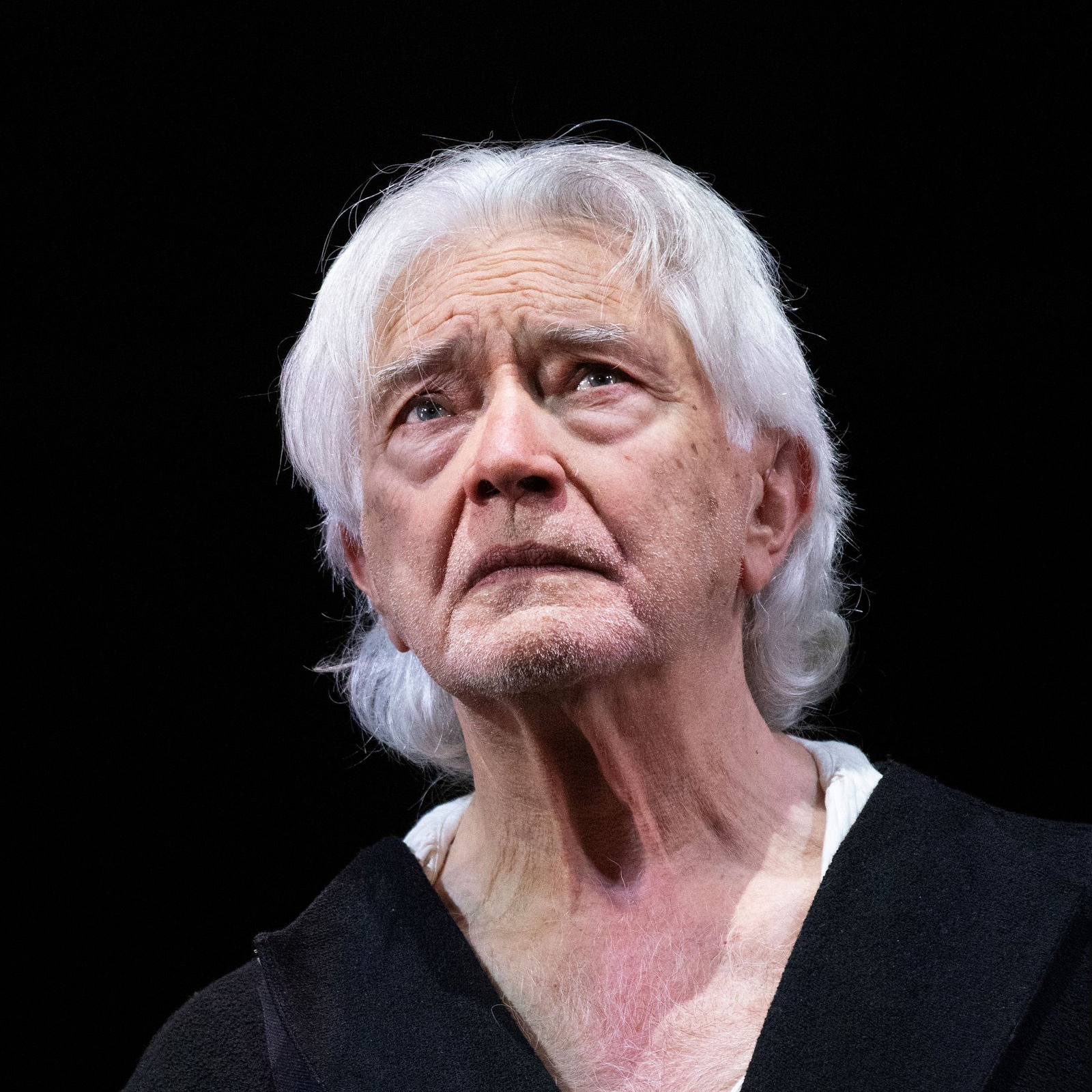
Jonathan Church’s touring production, from Theatre Royal Bath, has arrived at the Cambridge Arts Theatre with Martin Shaw returning to a role he first played two decades ago. His More took a while to find his full voice. In the early scenes, his delivery was rather too quiet for those of us who are hard of hearing. But the performance grew steadily in power, and by the trial it was storming. Shaw’s More was no plaster saint: he was witty, stubborn and humane, and he believed that his silence would protect him, only to discover that the state read that silence as defiance. When he declared himself “the King’s good servant, but God’s first”, the line carried the full weight of a friendship with Henry that had turned fatal.
For many of us, our picture of the Tudor court now comes from Hilary Mantel’s Wolf Hall trilogy, in which Thomas Cromwell is the subtle, sympathetic centre and More the cold zealot. It was fascinating to see the same events from Bolt’s opposite perspective. The heart of the evening was the duel between More and Cromwell, played with true verve by Sam Philips: two brilliant, ambitious servants of the same king, one defending the authority of the Church and the other engineering the King’s break with Rome. Historians now see both men in more complex terms than either Bolt or Mantel allows. Even so, their scenes crackled like a political and moral chess match.
Peter Losasso’s Richard Rich and Chris Larkin’s Norfolk helped create the atmosphere in which these events unfolded: Rich the eager hopeful who becomes a perjurer, Norfolk the uneasy friend caught between loyalty and survival. Paul Kemp’s Common Man, stepping in and out of the action as servant, jailer and finally executioner, kept the whole narrative very nicely pieced together.
Simon Higlett’s costumes were gorgeous, and his set transported us convincingly into the period without ever slowing the action.
This is a handsome, intelligent and finely acted production. After a hesitant start, Shaw rises magnificently to one of the great roles of twentieth-century drama. Nearly five centuries after More’s execution in 1535, Bolt’s question of what we owe our own conscience when power demands otherwise has lost none of its force.